Last Updated: November 12, 2026
Quick Summary
Yes, emergency hvac service is worth the extra cost when your home has lost heat in freezing weather, a cooling failure is putting an infant or elderly family member at risk, or water and carbon monoxide hazards are involved. In those cases, waiting until Monday can cost far more than the after-hours premium itself.
- Call immediately for no heat near freezing, suspected carbon monoxide, leaks, burning smells, or no cooling in extreme heat.
- Weak airflow, frequent cycling, and minor thermostat quirks can safely wait for a standard appointment.
- Ask whether the dispatch or diagnostic fee is credited toward the repair if you approve the work.
- Emergency visits often carry a full first-hour minimum plus overtime labor rates.
- Treat the after-hours fee as separate from the repair-versus-replace decision you make afterward.
Table of Contents
- The Verdict: When Emergency HVAC Service Pays for Itself
- What Is Considered an HVAC Emergency
- Emergency HVAC Service Cost: What the Premium Actually Buys
- Emergency HVAC Repair vs. Waiting Until Tomorrow
- Repair or Replace? The Economics of an Urgent Breakdown
- Questions to Ask an Emergency HVAC Company Before You Agree
- Safe Steps to Take While You Wait for the Technician
- Deciding Whether to Call 1st Service HVAC Tonight
- Frequently Asked Questions
The Verdict: When Emergency HVAC Service Pays for Itself
Yes, emergency HVAC service is worth the extra cost when your home has lost heat in freezing weather, a cooling failure is putting an infant or elderly family member at risk, or water and carbon monoxide hazards are involved. In those cases, waiting until Monday can cost far more than the after-hours premium itself.
Below, we break down exactly what the premium covers, when you can safely wait, and how to decide tonight.
What Is Considered an HVAC Emergency
An HVAC emergency is a heating or cooling failure that threatens health, safety, or property if left unaddressed overnight. The keyword there is threatens. A broken system in mild weather is inconvenient; a broken system in a cold snap or a heat wave is a different problem entirely.
Failures That Threaten Health, Safety, or Property
These situations justify an immediate call:
- No heat when outdoor temperatures are forecast to drop near or below freezing
- A suspected carbon monoxide issue, signaled by headaches, dizziness, or a CO alarm
- Water leaking from the furnace, air handler, or condensate line into floors or ceilings
- A burning smell or repeated breaker trips when the system starts
- No cooling during extreme heat, especially with infants, elderly residents, or anyone with a medical condition in the home
Any of these can turn a repair bill into a restoration bill fast.
Problems That Can Safely Wait for a Scheduled Appointment
Some issues are uncomfortable but not dangerous. A common approach is to book a standard appointment for:
- Weak airflow from some vents while others still work
- A system that runs but cycles on and off more than usual
- Minor thermostat quirks or a unit that isn’t reaching the set temperature by a degree or two
- Routine noises, or a system that still heats or cools, just not perfectly
If everyone in the home is safe and the weather is mild, morning is fine.
Emergency HVAC Service Cost: What the Premium Actually Buys
Emergency HVAC service cost generally reflects the fee structure a company uses for after-hours visits. Ask for that structure in writing before you agree to any work, so you can judge whether a given quote is fair.
Dispatch Fees, Overtime Rates, and the First-Hour Charge
Ask any company for its fee structure before you agree, and get it in writing. Ask specifically whether a dispatch or diagnostic fee is credited toward the repair if you approve the work, because that changes the effective cost of the visit.
An Itemized Look at an Emergency Invoice Versus a Standard One
Emergency and standard invoices can differ in how labor and fees are billed. Ask for the line items for each.
| Line Item | Standard Visit | Emergency Visit |
|---|---|---|
| Trip or dispatch fee | Standard rate | Higher after-hours rate; sometimes credited toward repair |
| Diagnostic fee | Often waived if you repair | Usually charged separately |
| Labor rate | Regular hourly rate | Overtime or emergency rate |
| Minimum charge | None or 30 minutes | Often a full first hour |
| Parts | Same | Same |
| Scheduling | Days out | Same night or weekend |
When you compare two quotes, compare the same line items, not just the headline trip fee.
How to Verify an Emergency Quote and Avoid Surprise Charges
Before you authorize work, ask these questions and write down the answers:
- Arrival window: What is the promised arrival window, and is there a charge if the technician arrives late?
- Authorization: Will I get a written estimate before any work begins, and will you call me before adding anything beyond the estimate?
- Overtime rate: What is the exact hourly rate after hours, and does it change on weekends or holidays?
- Fee credit: Is the dispatch or diagnostic fee credited toward the repair if I approve it?
- Warranty: What warranty covers the repair, and does it apply to after-hours work?
- Parts markup: Are parts billed at list price or with a markup, and can I see the part number?
Watch out: a quote that is only a single lump sum with no breakdown is hard to challenge later. Ask for the itemization in writing before the technician starts, and confirm whether the after-hours rate applies to the whole visit or only to labor performed outside standard hours.
What the Premium Does and Does Not Buy
If a company quotes an emergency repair far above the standard rate for the same fix, ask why. The answer should be traceable to specific line items, not to urgency alone.
Emergency HVAC Repair vs. Waiting Until Tomorrow
Emergency HVAC repair vs. waiting until tomorrow is really a question about risk. If the downside of waiting is a cold night under blankets, wait.
U.S. Department of Energy guidance on home heating and cooling notes that heating and cooling make up the largest share of home energy use, and a failing system under strain only gets worse.
Consider a furnace that quits at 9 p.m. in January. Waiting for a daytime appointment can mean nights of space heater use and a risk of a frozen pipe in an exterior wall.
Repair or Replace? The Economics of an Urgent Breakdown
When a system dies suddenly, the repair-versus-replace decision gets harder because you are under pressure. The emergency premium is a sunk cost of the visit, not a reason to replace, but it does change the math slightly, because a large repair bill on top of an after-hours fee can approach the down payment on a new system. The useful question is not “is this repair expensive?” but “how much useful life does this repair buy, and at what cost per year?”
A Simple Threshold to Apply Under Pressure
A common rule of thumb in the industry is to weigh system age against the size of the repair and the frequency of repeat visits before deciding.
A more concrete way to frame it: divide the repair cost by the number of years you expect the repair to add. To compare that figure against real numbers, see what to expect for HVAC system replacement costs.
How the Emergency Premium Fits In
The after-hours fee should be treated as a separate decision from repair-versus-replace. You paid it to get a diagnosis tonight; that money is spent either way. What matters is the repair quote you receive after the diagnosis.
Pressure to replace immediately, without a written diagnosis or a repair quote, is a pattern worth slowing down on. You can authorize a temporary fix to get through the night and still compare replacement quotes in daylight.
Factors Beyond the Immediate Bill
System age, remaining useful life, efficiency, and the cost of repeat visits all matter more than the single repair price. If you are weighing a large repair against a new system, ENERGY STAR’s guidance on heating and cooling is a useful starting point for comparing efficiency and long-term operating costs. A system that has needed two or three repairs in a year is telling you something the current bill does not.
Questions to Ask an Emergency HVAC Company Before You Agree
Before you say yes to an after-hours visit, ask four things: What is the total trip and diagnostic fee? What is the hourly rate after hours? Is there a first-hour minimum? And will I get a written estimate before any work begins?
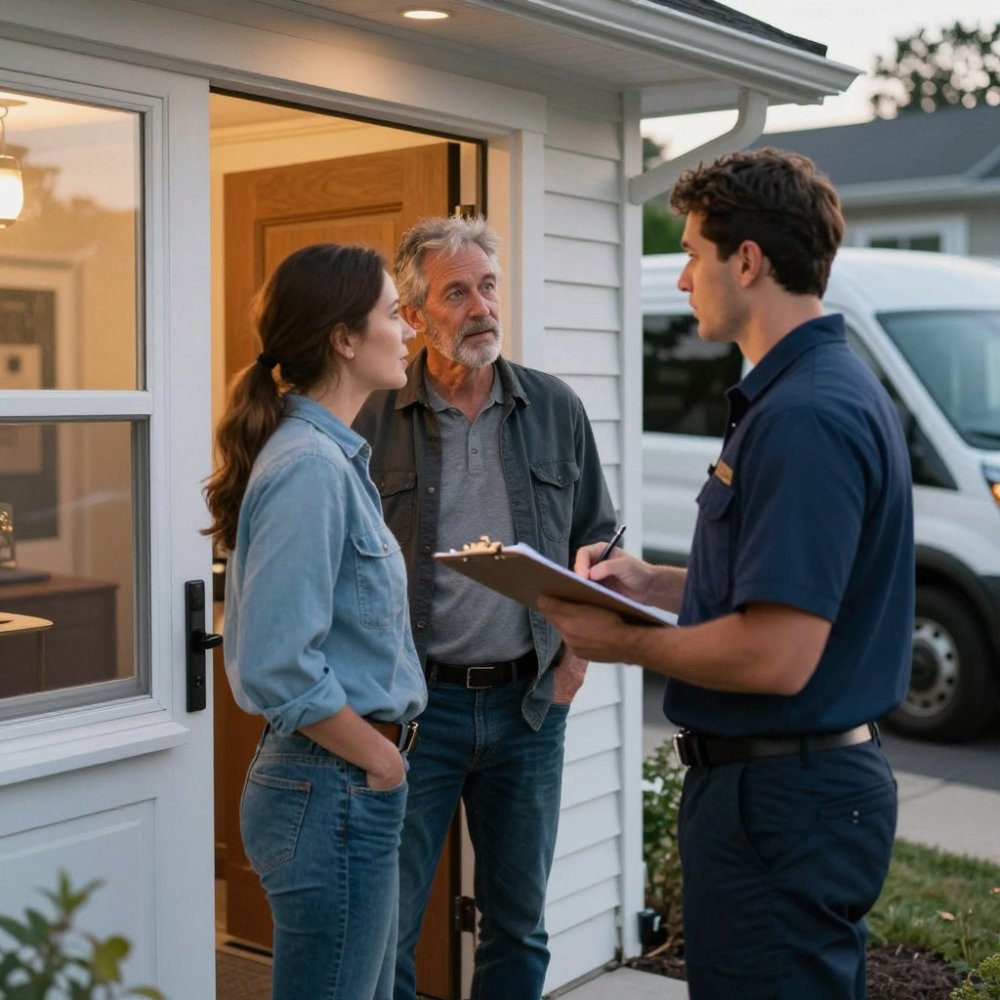
A reputable company can answer all four clearly. Watch out: if a technician pressures you into a full replacement on the spot without explaining the failed part or offering a repair option, slow down. Honest shops explain the diagnosis and let you decide.
Safe Steps to Take While You Wait for the Technician
While you wait, keep everyone safe and limit damage. If you smell gas or suspect carbon monoxide, leave the home and call your gas utility or 911 first, then the HVAC company.
For a no-heat situation, use space heaters carefully, keep them away from curtains and furniture, and never run a generator or grill indoors. For a no-cooling night, close blinds, run fans, and move the household to the coolest part of the home.
Deciding Whether to Call 1st Service HVAC Tonight
If your home is unsafe, uncomfortable, or at risk of damage, call tonight. If it is a minor issue in mild weather, a scheduled visit tomorrow will save you the premium.
At 1st Service HVAC, we are a family-owned team serving Richmond and the surrounding counties, and the owner has over 45 years of HVAC experience. We repair all makes and models.
If you are ready to act, you can also review emergency HVAC repair services you can call in the area, or read more about weekend emergency AC repair availability before you dial. For a closer look at what to do during a local failure, see our guide to emergency AC repair in Madison County. And to make sure you are hiring an honest company, check our list of signs of dishonest HVAC technicians before you agree to any work.
A failing system never picks a convenient time.
Frequently Asked Questions
Is emergency HVAC service more expensive than a regular service call?
Yes, in most cases. Emergency HVAC service rates are typically higher than standard rates. The premium covers overtime labor, rapid dispatch, and 24/7 technician availability. Whether that premium is worth paying depends on what is at risk if the system stays down overnight, such as a carbon monoxide risk, frozen pipes, or a household member who cannot handle extreme temperatures.
How much does an emergency HVAC call cost in total?
Emergency repair totals are typically higher than routine repair totals. That total usually bundles a dispatch or trip fee, a first-hour charge, overtime labor, and parts. Ask for a breakdown before approving work so you can see which portion is the emergency premium and which is the actual repair. Pricing varies by system type, season, and local market, so request a quote for your specific situation.
What is considered an HVAC emergency?
An HVAC emergency is a failure that puts health, safety, or property at risk if it waits. Examples include no heat during a hard freeze, a suspected carbon monoxide leak, a refrigerant leak, electrical burning smells, water leaking from the unit, or no cooling during extreme heat for an infant, elderly, or medically vulnerable household member. A system that is running but not keeping up, or a thermostat acting up on a mild day, usually qualifies for a scheduled appointment instead.
Does emergency HVAC service include the repair, or just the service call?
It depends on the company, so confirm this before dispatch. Some emergency HVAC service cost structures cover only the trip and diagnostic, with repair labor and parts billed on top. Others quote a first-hour charge that includes initial work. Ask directly whether the quoted fee includes the diagnostic, the repair labor, and any parts, and get the answer in writing or by text before the technician arrives so there are no surprise charges.
Can I safely wait until tomorrow to repair my air conditioner or furnace?
You can wait if there is no safety risk and temperatures are mild. If outdoor conditions are extreme, if anyone in the home is elderly, an infant, or medically fragile, or if you smell gas or burning, call now. While you wait, keep the home closed up, use safe temporary measures like fans or space heaters with proper clearance, and never run a fuel-burning appliance indoors without ventilation. A delayed repair can also turn a small fix into water damage or a full system replacement.
