Last Updated: October 25, 2026
Quick Summary
Emergency HVAC repair is urgent service to restore heating or cooling when a system fails, typically outside normal business hours. In Richmond KY, providers like 1st Service HVAC, Madison HVAC/R, and Next Level Heating and Air offer emergency service, so ask about diagnostic fees, after-hours surcharges, and response windows before you give your address.
- 1st Service HVAC is family-owned, with an owner who brings over 45 years of HVAC experience.
- Next Level Heating and Air publishes a $89 diagnostic visit with a written repair quote.
- Ask for the diagnostic fee, after-hours surcharge, and whether the fee is credited toward the repair.
- If you smell gas with no heat, leave the building and call your gas utility’s emergency line first.
- Compare providers on diagnostic fee, after-hours surcharge, quoted response window, and a written estimate.
Table of Contents
- 7 Emergency HVAC Repair Services Richmond KY Homeowners Can Call
- 1st Service HVAC: Family-Owned Emergency Repairs with 45 Years Behind Them
- Madison HVAC/R, LLC: 24/7 Emergency Service with Upfront Pricing
- Superior Heating & Air: Repairs, Maintenance, and Installation in One Call
- Affordable Service Solutions: Estimates Before Work Begins
- ComfortMaster Heating & Air: NATE-Certified Technicians for Richmond Homes
- Next Level Heating and Air: Published Diagnostic Fees and Repair Ranges
- GreenBox and Directory-Listed Options: What to Verify Before Calling
- What Emergency HVAC Repair Costs and How to Compare Providers
- How to Choose an HVAC Contractor Under Pressure
- Frequently Asked Questions
7 Emergency HVAC Repair Services Richmond KY Homeowners Can Call
A failed furnace on a January night or a dead air conditioner in July rarely waits for business hours. If you’re facing an HVAC emergency in the area right now, what to do before calling anyone walks you through the steps.
Emergency HVAC repair is urgent service to restore heating or cooling when a system fails, typically outside normal business hours. The best providers publish how to reach them, what a diagnostic visit involves, and whether weekend calls are covered.
Keep reading because the difference between a fast, honest repair and a three-day wait often comes down to one phone call to the right company.
1st Service HVAC: Family-Owned Emergency Repairs with 45 Years Behind Them
1st Service HVAC is a family-owned business serving Richmond and the surrounding counties. You can see its full heating and air service in Richmond KY page for details.
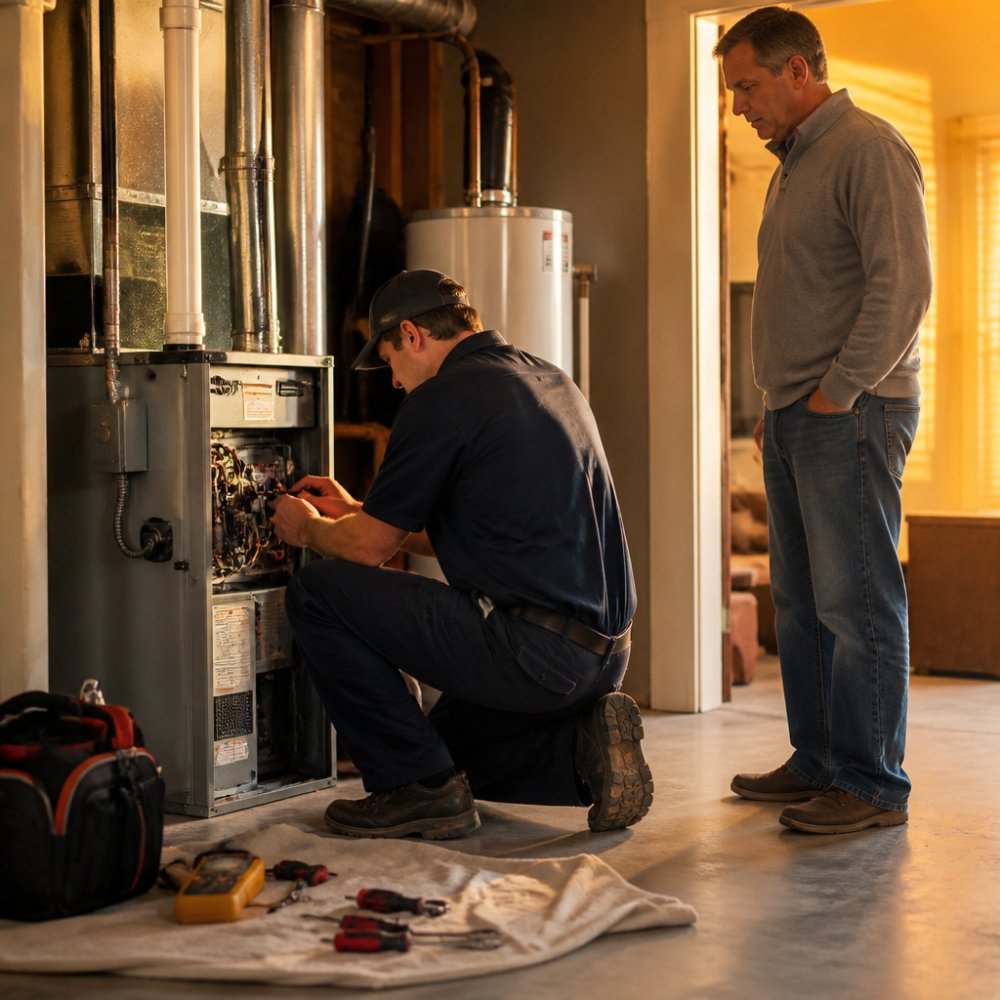
1st Service HVAC offers local knowledge. Richmond-area building styles and environmental conditions shape how systems fail, and that context speeds up diagnosis. The team repairs all makes and models and backs the work with a community-rooted reputation.
A common mistake is choosing a company that patches a problem instead of fixing it. Ask any provider whether they diagnose the root cause before quoting. 1st Service HVAC is committed to quality workmanship.
Best for: homeowners who want a local, family-owned team with deep experience.
Skip if: you need a service the company doesn’t list.
Madison HVAC/R, LLC: 24/7 Emergency Service with Upfront Pricing
The upfront pricing claim is worth testing. Ask for the diagnostic fee and the expected repair range before anyone arrives. A provider that states costs clearly earns trust fast.
Superior Heating & Air: Repairs, Maintenance, and Installation in One Call
What most guides miss is that a single provider for repair and installation can simplify decisions. When a compressor fails, the same team that maintained it can advise honestly on repair versus replacement.
Affordable Service Solutions: Estimates Before Work Begins
An estimate given over the phone before diagnosis is a guess, not an estimate. Confirm that the written figure follows an on-site inspection and lists the specific failed component. Verbal-only quotes and “starting at” pricing are the two most common sources of after-the-fact bill shock.
A common pattern among homeowners is approving the first estimate because the house is uncomfortable and the technician is already there. Slow down for one minute: confirm the diagnostic fee policy, confirm the estimate is itemized, and confirm whether after-hours or weekend calls carry a surcharge. Those three answers tell you more about a company than any star rating.
Best for: homeowners who want a stated estimate process and 24/7 availability in one call.
Skip if: you need a published price list before you dial, this listing does not show one, so ask directly.
ComfortMaster Heating & Air: NATE-Certified Technicians for Richmond Homes
When you call, ask directly: are the technicians who will arrive at my door certified? If you’re ready to book, use the company’s contact page to request help. A confident yes, with a name and credential, is a good sign.
Next Level Heating and Air: Published Diagnostic Fees and Repair Ranges
Next Level Heating and Air stands out for publishing numbers. Its Richmond service page lists a diagnostic visit at $89 with a written repair quote, typical repairs at $150-$600 depending on the failure, and average installation around $7,500 for equipment. Published figures make comparison easier, though the listing doesn’t verify emergency availability, so ask about after-hours calls.
GreenBox and Directory-Listed Options: What to Verify Before Calling
| What to Check | Why It Matters | Red Flag |
|---|---|---|
| Emergency hours | Confirms weekend/night coverage | Vague “available” claims |
| Diagnostic fee | Predicts your first cost | Refuses to state it |
| Written estimate | Protects against surprise bills | Only verbal quotes |
| Licensing and certification | Signals verified competency | No credentials given |
| Repair vs. replace advice | Prevents unnecessary replacement | Pushes replacement first |
A common mistake is skipping the signs of dishonest HVAC technicians checklist before calling an unfamiliar directory listing. Pushy replacement pitches and vague pricing are the classic warning signs.
Reach out to us for more information… →
What Emergency HVAC Repair Costs and How to Compare Providers
Most emergency HVAC pages tell you to “call now” and stop there. This section does the opposite: it breaks down what drives the bill, what to ask before dispatch, and how to compare two providers in under five minutes.
What actually drives the price
Emergency HVAC repair cost depends on four variables, and only one of them is the broken part:
- The failed component. A capacitor, ignitor, or flame sensor is a relatively small repair. A blower motor, inducer motor, or compressor is a larger one because of parts cost and labor time.
- Time of day. Nights, weekends, and holidays commonly carry an after-hours surcharge on top of the standard service call. Ask for the exact surcharge, not a range.
- Diagnostic fee. Many companies charge a trip/diagnostic fee that may or may not be credited toward the repair. This single policy can swing your out-of-pocket cost meaningfully.
- Parts availability. A part on the truck means one visit. A part that must be ordered means a second trip and, sometimes, a second trip charge.
Ask for the diagnostic fee, the after-hours surcharge, and whether the diagnostic fee is credited toward the repair, in that order, before you give your address. A provider that answers all three clearly is easier to trust than one that quotes a single “starting at” number.
The five questions to ask before dispatch
- Is there a diagnostic fee, and does it apply to the repair if I approve the work?
- What is your typical response time to my part of the Richmond area tonight?
- Do you charge extra for nights, weekends, or holidays, and how much?
- Will I get a written, itemized estimate before any work starts?
- Can you repair my system, or is replacement the only option you offer for this failure?
Write the answers down. Two providers answering the same five questions gives you a real comparison instead of a gut feeling.
Response times and service-area boundaries
Response time is the hardest thing to verify from a website, so ask for a window in minutes, not “promptly.” A common pattern is that providers quote a range for the metro area and a longer range for outlying communities, so confirm your address is inside the primary service boundary before you rely on a fast arrival. If you are outside the boundary, ask whether a trip charge applies.
Emergency triage before the technician arrives
While you wait, a few safe steps can prevent a small failure from becoming a dangerous one:
- No heat and you smell gas: leave the building and call your gas utility’s emergency line first. Do not flip switches or use your phone inside.
- No heat, no gas smell: check the thermostat batteries and the breaker, and confirm the furnace switch (often a standard light switch near the unit) is on. If those are fine, stop and wait for the technician.
- No cooling: check the breaker and the air filter. A clogged filter can cause a freeze-up; turn the system off at the thermostat and let it thaw rather than restarting it repeatedly.
- Burning or plastic odor, or repeated cycling: shut the system off at the thermostat and keep the appointment. Repeated short cycling stresses the compressor and can turn a small repair into a replacement.
Compare providers on three numbers, diagnostic fee, after-hours surcharge, and quoted response window, plus one document: the written estimate. Everything else is marketing.
Repair versus replacement, in plain terms
Age, repair history, and the size of the repair are the three factors that matter. A system near the end of its expected service life with a major component failure is usually a replacement conversation; a mid-life system with a small electrical failure is usually a repair. Ask for both numbers in writing so the decision is yours, not the technician’s.
For consumer-protection context, the FTC’s consumer guidance on home repair recommends written estimates and caution around high-pressure same-day decisions. The U.S. Department of Energy notes that regular maintenance extends equipment life, which is why a maintenance plan with your repair provider pays off. And ENERGY STAR guidance helps you judge whether a replacement is genuinely more efficient.
How to Choose an HVAC Contractor Under Pressure
Choosing an HVAC contractor during an emergency is hard, so narrow the field fast. Confirm the company serves your address, ask about emergency availability, and request the diagnostic fee up front. Then compare the repair-versus-replacement advice across at least two providers when the situation allows.
The FTC’s consumer guidance on home repair recommends getting written estimates and avoiding high-pressure same-day decisions. The U.S. Department of Energy notes that regular maintenance extends equipment life, which is why a maintenance plan with your repair provider pays off. And ENERGY STAR guidance helps you judge whether a replacement is genuinely more efficient.
Frequently Asked Questions
How do I know whether an HVAC problem needs emergency repair?
Treat it as an emergency when you smell gas, see sparks or smoke, have no heat during a hard freeze, or your AC stops during a heat advisory with young children, elderly residents, or medical equipment in the home. A system blowing warm air or making a grinding noise also warrants a fast call. For a slow drain or a single room that runs warm, a standard appointment usually works. When in doubt, shut the system off at the thermostat and call a Richmond emergency HVAC repair provider for guidance.
What should I ask before hiring an emergency HVAC repair service?
Ask four things: whether the after-hours rate differs from weekday pricing, whether a diagnostic fee applies and how much it is, whether the technician is licensed and NATE-certified, and whether you get a written quote before work begins. Also confirm the company serves your part of Madison County and how long a typical after-hours call takes. A provider that answers these plainly before dispatching a truck is usually the safer bet.
What drives emergency HVAC repair cost up or down?
The biggest factors are the time of day, the failed component, and the system’s age. After-hours and weekend calls usually carry a premium, and parts like compressors or blower motors cost more than a flame sensor or capacitor. Ask for the diagnostic fee and a written quote before approving anything.
What are common warning signs of dishonest HVAC technicians?
Watch for a technician who diagnoses a major failure without testing anything, pushes a full replacement on a system that only needs a repair, quotes a price that changes once the work starts, or refuses to put the estimate in writing. Another red flag is a sales pitch for parts your system does not use. Ask for the failed part to be shown to you and request the written quote before authorizing work.
What should I do while waiting for an emergency HVAC technician?
If you smell gas, leave the house and call your gas utility from outside. For a no-heat call in freezing weather, shut off the water supply to prevent burst pipes and open cabinet doors under sinks. For a no-cool call, turn the system off at the thermostat to avoid compressor damage, close blinds, and use fans. Never open the furnace cabinet or attempt a repair yourself. Keep your phone line free so the dispatcher can reach you.
When your furnace quits at midnight or your AC dies on a Saturday, you need a team that answers and shows up. 1st Service HVAC is family-owned, brings over 45 years of experience, and repairs all makes and models with honest workmanship. Get started with 1st Service HVAC and get your home comfortable again.
