
Last Updated: November 9, 2026
Quick Summary
Your house is unevenly cooled because of restricted airflow, duct problems, or a leaky building envelope. To find out why is my house unevenly cooled, check the filter and returns, inspect supply vents and ducts, then measure room-to-room temperatures; a 3 to 5 degree gap points to air distribution issues.
- Run the system at least 15 minutes before taking room temperature readings.
- A clogged filter chokes the system, and far rooms feel it first.
- Closing vents in unused rooms raises duct pressure and makes hot rooms hotter.
- A gap over 5 degrees after your checks means call a licensed technician.
- Set the fan to on for better air mixing, but expect higher electricity use.
Table of Contents
- Start With a Room-to-Room Temperature Check
- How to Fix Uneven Cooling in House: A Step-by-Step Diagnostic
- Why You Get Hot and Cold Rooms in House Layouts
- Uneven Airflow From AC Vents: What It Signals
- AC Not Cooling One Room? Rule Out These Causes
- Thermostat Location, Settings, and Zoning Fixes
- When to Call an HVAC Technician for Uneven Cooling
- Book a Diagnostic Visit With 1st Service HVAC
- Frequently Asked Questions
Start With a Room-to-Room Temperature Check
If you are wondering why is my house unevenly cooled, start with a simple temperature check before you touch anything.
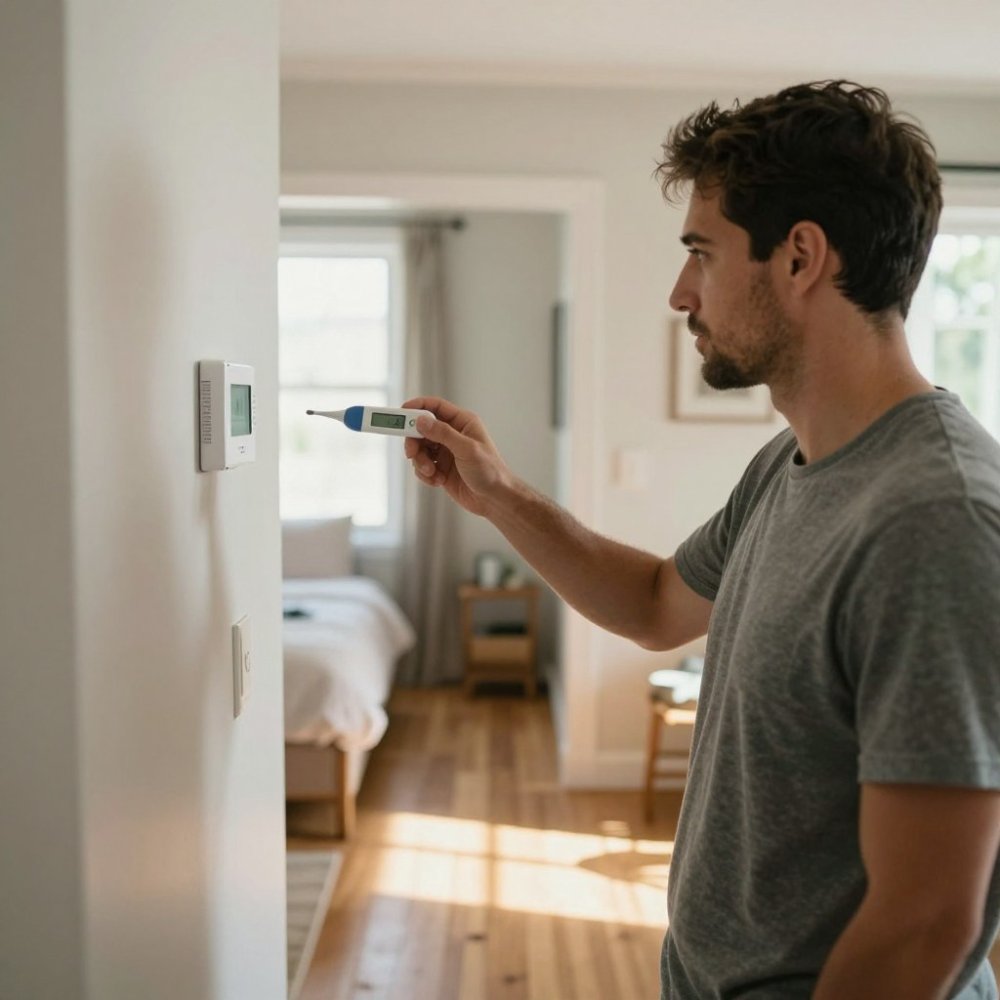
A gap of 3 to 5 degrees between rooms can point to an air distribution problem. A bigger gap often means ducts, insulation, or equipment trouble.
Here is how to run the check:
- Test each room at the same height, about 4 feet off the floor
- Close blinds first so sun exposure does not skew the reading
- Note the outdoor temperature and time of day
That last step matters. A room that runs hot only in the afternoon usually has a heat gain problem, not a duct problem.
How to Fix Uneven Cooling in House: A Step-by-Step Diagnostic
Most uneven cooling traces back to one of three things: restricted airflow, duct problems, or a leaky building envelope. Work through these steps in order, from easiest and safest to most involved. For a deeper companion guide on fixing uneven temperatures room by room, see How to Fix Uneven Temperatures in Your House. Stop and call a licensed technician if you reach a step that requires opening the air handler, working in a hot attic, or handling refrigerant lines.
Before you start, gather a digital thermometer, a flashlight, a screwdriver, and a notebook. Record the outdoor temperature and the time of day for each test so you can compare results later.
Step 1: Check the Air Filter and Return Airflow
A clogged filter chokes the whole system, and the rooms farthest from the air handler feel it first.
Next, check your return-air vents. Our team covers filter timing and airflow checks in this maintenance checklist guide if you want a season-by-season routine.
Watch out: never run the system without a filter in place, even briefly, because dust can coat the indoor coil and cause a costly cleaning.
Step 2: Inspect Supply Vents and Ductwork
Walk every room and confirm each supply vent is open and clear. Then look for these duct red flags:
- Torn or disconnected flex duct in the attic
- Crushed duct runs pinched behind drywall
- Visible gaps at joints and boots
Duct leaks in an attic pull in hot air and dump it into your rooms. That alone can make one side of the house feel warm. A common pattern is a flex run that has slipped off its collar at the plenum; the room at the end of that run gets almost no conditioned air.
If you can safely access the attic, inspect the first 10 feet of duct from the air handler. Do not climb into a hot attic alone or walk on exposed joists without proper boards. If you see disconnected duct, torn insulation, or crushed runs, note the location and call a technician rather than attempting a repair in a confined space.
Step 3: Test the Building Envelope and Insulation
Check attic insulation depth and look for gaps around windows, doors, and outlets. In most climates, attic insulation should reach the top of the joists or higher; if you can see bare joist tops, you likely need more.
Use a simple hand test: on a hot afternoon, touch the ceiling and interior walls of a warm room. If they feel noticeably warmer than interior walls in a cool room, heat gain through the envelope is likely a factor.
Step 4: Measure Room-to-Room Temperature Differences
After the easy checks, run a controlled temperature test so you can distinguish a persistent imbalance from normal variation. Place a digital thermometer at the same height in each room, about 4 feet off the floor and away from direct sun, supply vents, and exterior walls.
Repeat the test in the morning, afternoon, and evening. A room that runs hot only in the afternoon usually has a heat gain problem, not a duct problem. A room that stays cold all day points to airflow.
Step 5: Check Thermostat and Return Path
Confirm the thermostat is not reading a false temperature because of sun, lamps, or a nearby supply vent. Close the door to a warm room and see whether the gap worsens; if it does, the room may lack a return path. A common fix is a return-air transfer grille or a jumper duct, but that is a duct modification best planned with a technician.
When to Stop and Call a Technician
If you have replaced the filter, opened and cleared vents, and still see a gap over 5 degrees after your measurements, the next step is a professional diagnostic. Do not open the air handler, adjust refrigerant, or attempt to reseal ductwork in a hot attic yourself. A technician can measure static pressure, inspect the full duct system, and check equipment performance safely.
Work through these diagnostic steps in order, from easiest and safest to most involved.
| Step | What to check | What it signals |
|---|---|---|
| Step 1 | Air filter and return airflow | Clogged filter or blocked return starves downstream rooms |
| Step 2 | Supply vents and ductwork | Torn, crushed, or disconnected ducts dump hot attic air |
| Step 3 | Building envelope and insulation | Heat gain through ceiling and walls causes hot rooms |
| Step 4 | Room-to-room temperature differences | 3 to 5 degree gap suggests air distribution issue |
| Step 5 | Thermostat and return path | False readings or missing return path skew comfort |
| Stop point | Gap over 5 degrees after checks | Call a licensed technician for diagnostic |
Why You Get Hot and Cold Rooms in House Layouts
Layout drives comfort more than most homeowners expect. A two-story home with one thermostat will always fight itself, because heat rises and the upstairs stays warmer.
Common layout problems include:
- A single thermostat serving two floors
- Long duct runs to far bedrooms
- Rooms above a garage or over a crawlspace
Multi-story homes often need zone control or a balancing adjustment rather than a bigger system. Adding cooling capacity to a distribution problem wastes money.
Uneven Airflow From AC Vents: What It Signals
Weak airflow from one vent while others blow strong points to a restriction, not a failing air conditioner.
Here is the part most guides miss: closing vents in unused rooms does not save energy.
If one vent blows weak air, check the damper position first. A balancing damper near the air handler may be partly shut from an old adjustment.
AC Not Cooling One Room? Rule Out These Causes
When a single room stays warm, work from simplest to hardest:
- Supply vent closed, blocked, or pointed at a wall
- Return path blocked by a closed door
- Duct run crushed or leaking in the attic
Before you spend money on repairs, rule out a broader system problem. If other rooms also feel warm, the issue may be the AC itself. Our guide on why your AC blows warm air covers those causes in detail.
Thermostat Location, Settings, and Zoning Fixes
A thermostat on a sunlit wall or near a supply vent reads the wrong temperature and shuts the system off early. That leaves far rooms warm while the hallway feels fine. Before you buy anything, test whether the thermostat is the problem.
Test the Thermostat Location
Tape a piece of cardboard over the thermostat for one cooling cycle on a sunny afternoon, blocking direct sun without covering the vents. If the room temperature reading drops and the system runs longer, sun exposure is skewing the reading. Move lamps, TVs, or heat-producing appliances away from the thermostat. If the thermostat sits near a supply vent, a technician may need to relocate it or install a remote sensor.
Settings That Help
- Set the fan to “on” for better air mixing between cycles. This runs the blower continuously, which can even out temperatures but also uses more electricity and pulls more humidity back into the air.
- Use a smart thermostat with remote sensors placed in the problem room. The system can average readings or prioritize the warm room, but expect the rest of the house to run slightly cooler as a result.
- Avoid setting the thermostat much lower than normal to “force” cooling; it does not cool faster and can freeze the coil or drive up bills.
Watch out: continuous fan operation can make a humid climate feel clammy because the blower re-evaporates moisture from the coil between cycles. If your home feels sticky, switch back to “auto.”
Balancing Dampers vs. Zoning
If one branch of ductwork feeds several rooms, a balancing damper near the plenum can redirect more air to the warm rooms. This is a low-cost adjustment, but it can raise pressure in the duct system and reduce total airflow if overdone.
Zoned HVAC with motorized dampers and separate thermostats solves layout problems that balancing alone cannot, especially in two-story homes with one system.
What to Ask Before You Spend
Ask a technician to measure static pressure and room-by-room airflow before recommending zoning. If the duct system is restrictive, adding zones can make the problem worse. A diagnostic visit should include a thermostat location check, a filter and airflow inspection, and a clear explanation of whether balancing, a duct repair, or zoning is the right next step.
When to Call an HVAC Technician for Uneven Cooling
Call a licensed technician when the easy checks do not close the gap. Signs it is time:
- A temperature difference over 5 degrees after balancing
- Visible duct damage in the attic
- Ice on the refrigerant lines or coil
A diagnostic visit should include a filter and airflow check, a duct inspection, and a clear explanation of findings before any work begins. Before you book a visit, our guide on lowering high cooling bills helps you judge whether the fix is worth the cost.
Book a Diagnostic Visit With 1st Service HVAC
Uneven cooling rarely fixes itself, and guessing at parts gets expensive. The faster path is a proper diagnostic from a team that explains what it finds.
1st Service HVAC is family-owned, and our owner brings over 45 years of HVAC experience. Our licensed technicians serve homeowners across Richmond and Madison County.
Get started with 1st Service HVAC and get every room in your home cooling the way it should. Call us to schedule a diagnostic visit and we will trace the problem to its source.
Uneven cooling is a puzzle, but it has an answer, and it usually starts with airflow rather than a new system.
Frequently Asked Questions
Can a dirty air filter cause uneven cooling?
Yes. A clogged filter restricts airflow through the whole system, so rooms at the end of long duct runs get less cool air than rooms near the air handler. Check the filter monthly during heavy cooling season and replace it when it looks gray or matted. A clean filter is the cheapest first step in any uneven cooling diagnosis, and it protects the blower from strain.
Can closed or blocked vents make rooms cool unevenly?
Closing vents in unused rooms often backfires. It raises static pressure in the ductwork, which pushes less air to the rooms you actually want cooled and can stress the blower motor. Furniture, rugs, and curtains blocking supply vents cause the same problem. Open every supply and return vent, clear obstructions, and see whether the hot and cold rooms in house balance out before changing anything else.
Why is one side of my house colder than the other?
Sun exposure, duct layout, and thermostat placement usually explain it. West- and south-facing rooms pick up afternoon heat gain, while rooms far from the air handler lose cooling capacity along long duct runs. A thermostat on an exterior wall or near a sunny window reads the wrong temperature and short-cycles the system. Measuring room-to-room temperature differences with a thermometer tells you whether the gap is airflow, sun, or equipment.
When should I call an HVAC technician about uneven cooling?
Call a technician when you have checked the filter, opened all vents, and still see more than a 3 to 5 degree difference between rooms. Also call if you hear rattling or whistling in the ducts, notice crushed or disconnected ductwork, or the system runs constantly without catching up. A diagnostic visit should include static pressure testing, duct inspection, and a refrigerant and equipment check.
