
Last Updated: October 28, 2026
Quick Summary
Uneven temperatures in your house usually come from restricted airflow, duct problems, insulation gaps, or thermostat placement rather than the equipment itself. Start by measuring room-to-room differences, then check vents, filters, and returns before calling a technician. If simple fixes close the gap to 3 degrees or less, you’ve solved it at the lowest cost.
- Run a room-by-room temperature check with windows closed and the system running 30 minutes.
- Replace a dirty air filter, which costs $10 to $30 and takes about 5 minutes.
- Open all supply vents and return grilles and clear furniture, rugs, and curtains blocking them.
- Weatherstripping and outlet gaskets cost $20 to $100 in materials for drafty rooms.
- Seal leaky ducts before adding insulation, and try zoning before replacing the system.
Table of Contents
- Start With a Simple Room-by-Room Temperature Check
- How to Fix Uneven Temperatures in a House: A Symptom-Based Diagnostic Flow
- HVAC Airflow Problems: Blocked Vents, Dirty Filters, and Restricted Returns
- Ductwork Causing Uneven Temperatures: Leaks, Bad Design, and Long Runs
- One Room Colder Than the Rest of the House: Insulation, Sun Exposure, and Thermostat Location
- System Capacity, Zoning, and When Equipment Is the Real Problem
- Prioritize Your Fixes: What to Try First and What to Budget For
- Book a Professional HVAC Inspection With 1st Service HVAC
- Frequently Asked Questions
Start With a Simple Room-by-Room Temperature Check
If your house temperature is uneven, start by measuring it. You can’t fix hot and cold spots until you know where they are and how big the gap is. A simple temperature check can help identify a possible cause.
Here’s how to measure and document room-to-room differences.
How to Measure and Document Room-to-Room Differences
You don’t need fancy tools. A basic thermometer or a smart thermostat reading works.
- Close all windows and exterior doors
- Set the thermostat to a steady temperature and let the system run 30 minutes
- Write down the temperature in each room, at eye level
- Note the time of day and the weather outside
- Repeat the check in the morning and late afternoon
- Record which rooms face the sun and which stay shaded
Write down the temperature differences between rooms.
How to Fix Uneven Temperatures in a House: A Symptom-Based Diagnostic Flow
Uneven temperatures can have different causes. The checks below describe some possible factors to consider.
Step 1: Confirm the pattern before touching anything
Run the room-by-room check above and write down the temperature in the coldest and warmest rooms at the same time of day.
Step 2: Rule out airflow restrictions (cheapest, fastest)
Airflow problems can contribute to uneven temperatures. You can check these items:
- One room always cold, rest of the house fine: inspect that room’s supply vent and return grille. A closed damper, a rug over a floor register, or a sofa pushed against a return will starve the room.
- Some rooms never get air at all: a closed damper at the branch takeoff, a crushed flex duct, or a disconnected run. This is a duct problem, not an equipment problem.
- Every room off and the system runs nonstop: start with the air filter and the thermostat. A clogged filter chokes the whole system; a thermostat reading the wrong room runs the system off a false signal.
- Rooms swing hot and cold all day: look at sun exposure and thermostat placement before you suspect the equipment.
If opening vents, replacing the filter, and clearing obstructions does not close the gap, consider the other possible causes below.
Step 3: Separate insulation and envelope problems from duct problems
Insulation and building-envelope issues are among the factors to consider alongside duct issues.
- Upstairs hot, downstairs cold in summer (and the reverse in winter): suspect duct design or a system that can’t balance two floors. Stack effect and long duct runs both push air unevenly across levels.
- A room cold only on windy days: drafts and insulation gaps, not ducts. Check weatherstripping, outlet gaskets, and attic or rim-joist insulation.
- A room cold in the morning but hot by mid-afternoon: sun exposure. South- and west-facing rooms gain heat through windows faster than the system can offset it.
- Rooms at the end of the duct run always weakest, plus dust around vents or whistling in the walls: duct leakage or undersized runs. This is the signature of a duct problem.
Step 4: Only then question the equipment
If the gap persists, the system itself could be one possible factor. Testing capacity and static pressure requires specialized assessment.
Document each step as you go: the date, the outdoor temperature, the room readings, and what you changed.
Safe DIY Checks vs. Work That Needs a Technician
Some checks may be suitable for homeowners, while other work may require a technician.
Safe to do yourself:
- Replace the air filter
- Open supply vents and return grilles
- Clear furniture blocking vents
- Check the thermostat location and settings
- Seal drafty windows and doors with weatherstripping
- Add outlet and switch-plate gaskets on exterior walls
Call a technician for:
- Duct leaks inside walls or attics
- Refrigerant or electrical work
- Testing system capacity and static pressure
- Adding HVAC zoning or a new return
- Any work inside the furnace or air handler
Leave work inside the furnace or air handler to a professional.
HVAC Airflow Problems: Blocked Vents, Dirty Filters, and Restricted Returns
Restricted airflow is one possible cause of uneven temperatures.
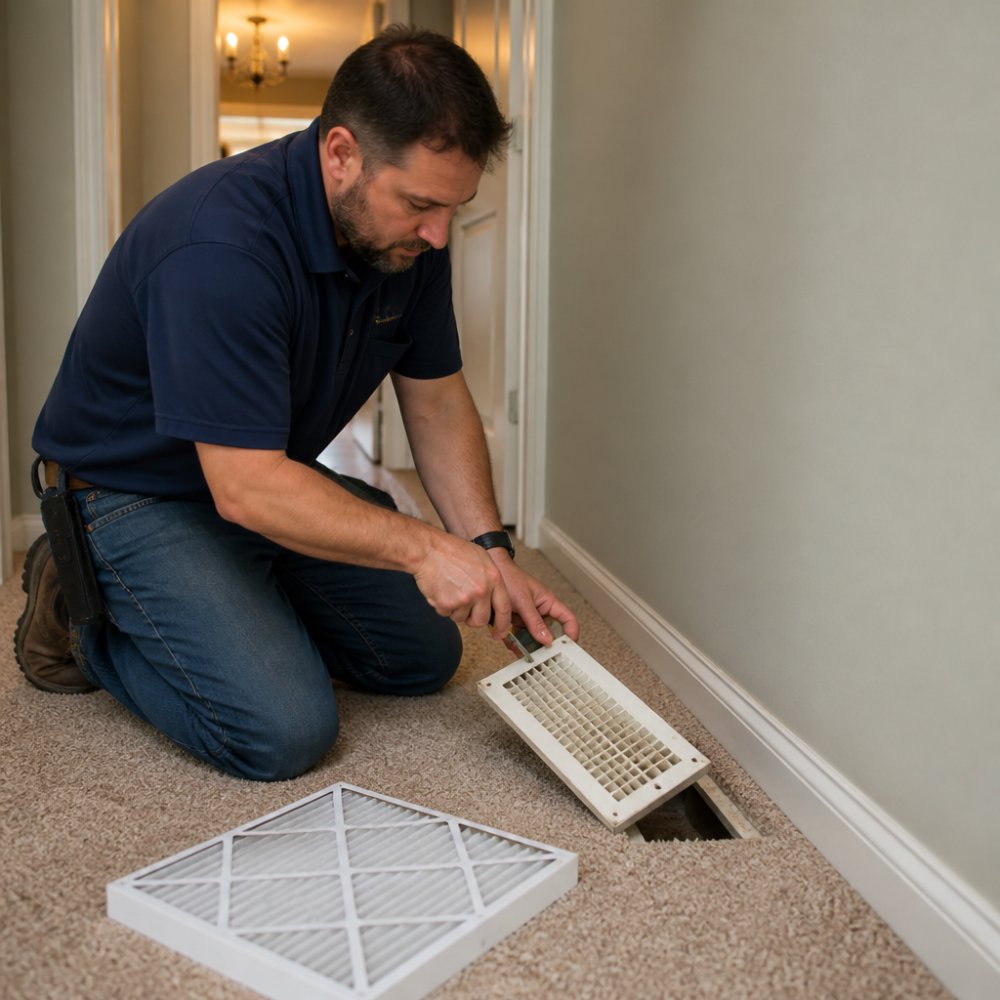
Start with these three checks:
- Blocked or closed vents: walk every room and open all supply vents and return grilles. Furniture, rugs, and curtains often cover them.
- Dirty air filter: a clogged filter chokes the whole system. Check it monthly and replace it when it looks gray.
- Restricted returns: a house needs return air to balance supply air. Blocked returns make rooms stuffy and uneven.
Closing vents in unused rooms may affect airflow. Consider keeping vents open.
Ductwork Causing Uneven Temperatures: Leaks, Bad Design, and Long Runs
Ductwork is one possible factor in uneven temperatures.
Signs of a duct problem:
- Rooms at the end of the run are always weakest
- Dust builds up fast around vents
- You hear whistling or rattling in the walls
- Some rooms feel fine while others never catch up
If you suspect your ducts are the issue, contact a professional for an assessment.
One Room Colder Than the Rest of the House: Insulation, Sun Exposure, and Thermostat Location
When one room is colder than the rest of the house, possible factors include insulation, drafts, sun exposure, and thermostat placement.
Check these first:
- Insulation gaps: exterior walls, attics, and crawl spaces lose heat fast
- Air leaks and drafts: gaps around windows, doors, and outlets let cold air in
- Sun exposure: south- and west-facing rooms bake in the afternoon while shaded rooms stay cool
- Thermostat location: a thermostat near a sunny window or a hot hallway reads the wrong temperature and runs the system off a false signal
Seasonal and Time-of-Day Troubleshooting
Uneven temperatures may vary over the course of a day or with weather. Track when the problem shows up to document the pattern.
System Capacity, Zoning, and When Equipment Is the Real Problem
The equipment itself is one possible factor in uneven temperatures.
HVAC zoning is one possible approach to consider for uneven temperatures.
If your system is older and the uneven temperatures came on slowly, consider whether the system may be a factor. Review the signs of an aging HVAC system before deciding on replacement. If diagnostics point to the furnace, you can learn about furnace repair options. 1st Service HVAC provides furnace maintenance and reliable heating and cooling solutions.
Prioritize Your Fixes: What to Try First and What to Budget For
Consider the possible causes before deciding what to address. The table below lists possible fixes and the kind of issue each may relate to.
| Priority | Fix | Typical cost | Effort | Best for |
|---|---|---|---|---|
| 1 | Replace dirty air filter | $10-$30 for a standard filter | 5 minutes | Whole-house restriction, system running nonstop |
| 2 | Open all vents and returns; clear obstructions | $0 | 15 minutes | One room starved, stuffy rooms |
| 3 | Weatherstrip doors and windows; add outlet gaskets | $20-$100 in materials | Half a day | Drafty rooms, cold on windy days |
| 4 | Seal and balance ductwork | Several hundred to a few thousand dollars, depending on access and leakage | Pro job | Rooms at the end of the run, whistling ducts, dust at vents |
| 5 | Add attic or wall insulation | Varies widely with area and material; get a written quote | Pro job | Rooms over unconditioned space, persistent cold spots |
| 6 | Add HVAC zoning or upgrade the system | Highest-cost tier; zoning is usually far less than a full system replacement | Pro job | Multi-story imbalance, one zone always behind |
How to decide when to stop doing it yourself
Use the diagnostic flow to set a stopping point. If Steps 1 through 3 (filter, vents, weatherstripping) close the gap to 3 degrees or less, stop. You’ve solved it at the lowest cost.
If the gap persists after those steps, other possible factors include duct leakage, insulation, or equipment.
- Duct sealing before insulation. Sealing leaky ducts in an attic or crawl space keeps conditioned air where it belongs; insulating first can trap the loss.
- Insulation before zoning. Zoning balances air between zones, but it can’t fix a room that loses heat through a thin wall.
- Zoning before a system replacement. If the equipment is the right size but can’t reach one part of the house, zoning is usually the cheaper fix. Replace the system only when testing shows it’s undersized, oversized, or failing.
If the problem persists, contact a professional to discuss possible next steps.
If comfort problems keep coming back after a fix, 1st Service HVAC provides furnace maintenance. You can also read about the benefits of annual HVAC maintenance plans to plan ongoing care.
Book a Professional HVAC Inspection With 1st Service HVAC
If you’ve changed the filter, opened the vents, and rooms still won’t balance, contact 1st Service HVAC about its heating and cooling solutions.
As a family-owned business, 1st Service HVAC is dedicated to honest service and quality workmanship. Contact us to discuss your heating and cooling needs.
Frequently Asked Questions
Can a dirty air filter cause uneven temperatures in a house?
A dirty air filter is one possible factor to consider when investigating uneven temperatures. Follow the filter manufacturer’s instructions for checking and replacement.
Can closed or blocked vents make room temperatures uneven?
Blocked or closed vents are one possible factor to consider when investigating uneven temperatures. Check for obstructions and consult a qualified HVAC professional if the problem persists.
When should I call an HVAC technician about uneven temperatures?
Consider contacting an HVAC professional if uneven temperatures persist or you notice unusual sounds or visible duct damage. A professional can assess the issue and discuss possible next steps.
Is 72 a good temperature to keep your house at?
Comfort preferences vary by household. If rooms have different temperatures, the difference may have several possible causes.
Uneven temperatures won’t fix themselves, and guessing at the cause can cost you more in the long run. Let 1st Service HVAC find the real problem with a thorough inspection, honest diagnosis, and workmanship you can trust. Get started with 1st Service HVAC and enjoy even, year-round comfort in every room.
