Last Updated: November 5, 2026
Quick Summary
To improve indoor air quality in your Richmond KY home, test the air first, then pull one of three levers: better filtration, ventilation, or humidity control. Keep relative humidity between 30% and 50%, change filters on schedule, and fix crawlspace moisture before it becomes mold.
- Indoor pollutant levels can run several times higher than outdoor levels, per EPA guidance.
- A bath fan should run 20 minutes after a shower, and range hoods should vent outdoors.
- Standard 1-inch filters protect equipment; higher MERV ratings trap smaller particles but raise static pressure.
- Entry-tier spending means a pleated MERV 11 filter and a scheduled change interval.
- A vented dirt crawlspace wicks ground moisture upward all summer, and nearby leaky ducts can pull it inside.
Table of Contents
- What Is Good Indoor Air Quality and Why It Matters in Richmond Homes
- Signs Your Home’s Air Quality Needs Attention
- What Is Good Indoor Air Quality? Reading the Numbers
- Residential Indoor Air Quality Testing: What to Expect
- Filtration, Ventilation and Humidity: The Three Levers for Air Quality in Homes
- HVAC Maintenance and Duct Cleaning for Cleaner Air
- Cost-Benefit Analysis of IAQ Upgrades for Richmond Homeowners
- Schedule Your In-Home Air Quality Assessment
- Frequently Asked Questions
What Is Good Indoor Air Quality and Why It Matters in Richmond Homes
Good indoor air quality means the air inside your home has low levels of pollutants, healthy humidity, and enough fresh air exchange to keep your family breathing easy. In Richmond, that definition comes with local complications: valley humidity, older housing stock, and seasonal pollen that all push indoor air quality in the wrong direction.
The U.S. Environmental Protection Agency’s indoor air quality guidance notes that indoor pollutant levels can run several times higher than outdoor levels, which matters because most of us spend the bulk of our day inside.
The Pollutants Hiding in Madison County Homes
The most common indoor pollutants in this area fall into a few groups: particulate matter from dust and pollen, volatile organic compounds off-gassing from paints and furniture, mold spores feeding on damp crawlspace air, and carbon monoxide from fuel-burning appliances. Older Richmond homes often have leaky ductwork that pulls crawlspace air, mold spores included, straight into living spaces.
Signs Your Home’s Air Quality Needs Attention
If your family wakes up congested, the windows fog up on mild days, or dust settles on furniture within a day of cleaning, your home is telling you something. Other warning signs include lingering cooking odors, musty smells in the basement, and allergy symptoms that ease when you leave the house.
Watch out: a persistent musty smell usually means moisture is feeding mold somewhere you can’t see. That’s a job for a professional inspection, not an air freshener.
What Is Good Indoor Air Quality? Reading the Numbers
Good indoor air quality is measured by a handful of readings, not by how the air “feels.” A professional assessment checks particulate levels, humidity, carbon monoxide, and airflow, then compares each against recognized benchmarks.
Indoor Air Quality Readings That Matter Most
The readings we check first are relative humidity, ideally between 30% and 50%, carbon monoxide near zero in living spaces, and particulate matter low enough that filtration isn’t fighting a losing battle. Humidity above 50% invites mold; below 30% dries out sinuses and wood floors. The EPA’s guide to indoor air quality and humidity explains why that middle range protects both your health and your home.
A professional assessment compares each key reading against recognized benchmarks.
| Reading | Target | Note |
|---|---|---|
| Relative humidity | 30% to 50% | Above 50% invites mold; below 30% dries out sinuses and wood floors |
| Carbon monoxide | Near zero in living spaces | One of the readings checked first |
| Particulate matter | Low enough that filtration isn’t fighting a losing battle | Checked alongside humidity and airflow |
Residential Indoor Air Quality Testing: What to Expect
Residential indoor air quality testing is a room-by-room check of the air your family actually breathes.
You’ll get plain-language findings: what’s elevated, where it’s coming from, and which fix addresses it. Testing isn’t about scaring you into a new system; it’s about knowing whether you need filtration, ventilation, humidity control, or simply a tune-up.
Filtration, Ventilation and Humidity: The Three Levers for Air Quality in Homes
Every air quality fix pulls one of three levers: filter the air better, exchange stale air for fresh, or control moisture.
HEPA Filtration and Air Purification Options
Filtration starts at the filter slot. Standard 1-inch filters are there to protect the equipment. Higher MERV ratings trap smaller particles but raise static pressure, so confirm your system can handle the upgrade before you buy.
Ventilation Strategies and Air Exchange Rate
Air exchange rate is how often your home’s full air volume is replaced with outdoor air, usually expressed in air changes per hour (ACH). Older, leakier homes often exchange air too fast in winter, wasting heat, while tightly sealed newer homes exchange too slowly, trapping VOCs, moisture, and cooking byproducts.
Bath and kitchen exhaust fans are the cheapest ventilation upgrade: a bath fan should run 20 minutes after a shower, and a range hood should vent outdoors, not recirculate, every time you cook. If some rooms stay stuffy while others are fine, the problem is often distribution rather than total airflow, and our guide on how to fix uneven temperatures in your house walks through the likely causes.
Humidity Control and Moisture Management
Humidity is the lever homeowners underestimate. The target range is 30% to 50% relative humidity year-round; above 50% invites mold, dust mites, and musty crawlspace air, while below 30% dries out sinuses, wood floors, and furniture joints.
Reach out to us for more information… →
Crawlspaces deserve their own line item. A vented dirt crawlspace wicks ground moisture upward all summer, and leaky ductwork nearby can pull that damp air, mold spores included, straight into living spaces. The EPA’s guide to indoor air quality and humidity explains why that middle range protects both your health and your home.
HVAC Maintenance and Duct Cleaning for Cleaner Air
A clogged filter, a dirty blower, or ducts caked with debris all circulate airborne contaminants every time the system runs.
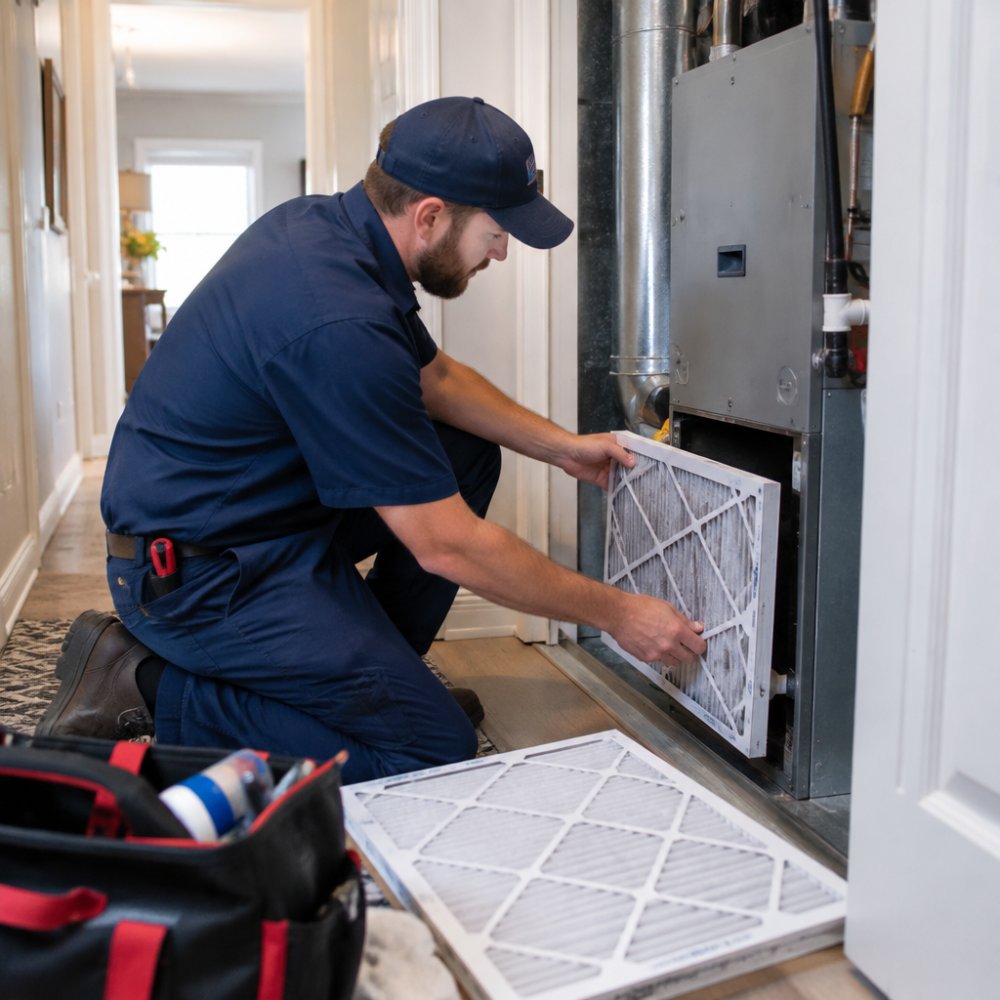
A common mistake is skipping filter changes until airflow drops. Change them on schedule, keep the blower and coils clean, and have ducts inspected if you see debris at the registers. If you’d rather not track it yourself, our overview of the benefits of annual HVAC maintenance plans explains how year-round servicing protects both air quality and equipment life, and our guide to the importance of regular furnace tune-ups covers what a tune-up actually involves.
Cost-Benefit Analysis of IAQ Upgrades for Richmond Homeowners
IAQ upgrades range from a few dollars for a better filter to a full system upgrade, so it pays to match spending to the problem testing reveals.
A Tiered Way to Think About IAQ Spending
Think in tiers rather than products. The entry tier is filter upgrades and maintenance: a pleated MERV 11 filter and a scheduled change interval cost little and address the particulate load that drives most allergy complaints. The next tier is moisture control, a crawlspace vapor barrier, a whole-home dehumidifier, or a bath fan upgrade, which fixes root causes that filtration can’t touch. The third tier is ventilation, such as an ERV or a fresh-air intake, which matters most in tightly built homes. The top tier is whole-home purification, UV-C, air scrubbers, or a media cabinet with high-MERV filtration, and it’s worth the investment only when testing shows persistent particulate, biological, or odor problems that lower tiers haven’t solved.
What Drives the Payback
IAQ upgrades can offer benefits in a few areas. First, health: households with asthma, allergies, pets, or elderly residents often see the clearest benefit from filtration and moisture control, which is why those homes should weight spending toward the lower tiers. Second, equipment life: a system that moves air properly and holds humidity in range runs more efficiently and lasts longer, which shows up on summer utility bills and delays replacement. Third, avoided remediation: catching a crawlspace moisture problem before it becomes a mold remediation project is almost always cheaper than fixing it after the fact.
Matching the Upgrade to the Household
The right spend depends on who lives there. A household with elderly residents benefits most from ventilation and consistent humidity, since dry winter air and stale summer air both hit older lungs harder. A household with no complaints and a tight, newer home may only need scheduled filter changes and an annual HVAC check. Homeowners planning a bigger investment should read our guide on how to choose energy efficient HVAC before committing, since efficiency and air quality upgrades often overlap.
Schedule Your In-Home Air Quality Assessment
If you want to know what’s actually in your air before spending a dime on fixes, start with an assessment. At 1st Service HVAC, we’re a family-owned team with more than 45 years of hands-on HVAC experience and licensed technicians.
Before you book with anyone, our guide on how to choose the right HVAC contractor covers the questions worth asking. Then call 1st Service HVAC to schedule your in-home air quality assessment and get a clear plan for cleaner air.
Frequently Asked Questions
How do you fix poor indoor air quality?
Start by reducing sources of indoor pollutants and keeping humidity between 30 and 50 percent. Confirm your HVAC system moves enough air and has a filter suited to it. If symptoms persist, schedule residential indoor air quality testing to find the specific pollutant before buying equipment.
What are signs of poor indoor air quality?
Watch for condensation on windows, musty odors, dust settling on surfaces within days of cleaning, and family members who wake with congestion or headaches that ease when they leave home. Visible mold, stale air in bedrooms, and a furnace that runs constantly can also point to air quality in homes that needs work. These signs do not confirm a specific pollutant, so pair them with indoor air quality readings or a professional assessment.
When should I get residential indoor air quality testing?
Book testing if you have unexplained symptoms, visible mold, a recent renovation, a new baby, or a family member with asthma or allergies. Testing also makes sense after moving into an older Richmond home with a crawl space or a fuel-burning appliance you cannot verify. A technician can help identify the pollutants and humidity issues in your home and recommend next steps.
Can an HVAC system improve indoor air quality?
Yes. Your HVAC system is the delivery network for filtration, ventilation and dehumidification. A correctly sized system with a MERV 11 to 13 filter, sealed ductwork and steady airflow removes a meaningful share of particulate matter and keeps humidity in range. Regular HVAC maintenance keeps filtration efficiency from dropping as the blower and coils collect dust.
What indoor air quality readings should homeowners pay attention to?
Focus on four numbers: PM2.5 particulate matter, relative humidity, carbon monoxide and total volatile organic compounds. Keep relative humidity between 30 and 50 percent. Recheck after any filtration or ventilation change.
How often should I change my HVAC air filter?
Check your filter regularly and change it on a schedule that fits your home. A clogged filter raises static pressure, cuts airflow and lowers air filtration efficiency, which stresses the blower and raises energy use. Write the change date on the filter edge so you never guess.
Breathing easier at home starts with knowing what’s actually in the air. 1st Service HVAC brings licensed technicians, honest recommendations, and decades of local experience to every assessment. Call today to schedule your in-home air quality assessment and take the first step toward healthier air.
