
Table of Contents
- Start With a Load Calculation, Not a Guess
- HVAC Efficiency Ratings Explained: SEER2, HSPF2, and AFUE
- Heat Pump vs Furnace Energy Efficiency: Which Fits Your Home?
- Match the System to Your Climate and Home
- Compare Single-Stage, Two-Stage, and Variable-Speed Systems
- HVAC Installation and Energy Efficiency: Why the Installer Matters
- Calculate Total Cost of Ownership and Available Incentives
- How to Choose Energy Efficient HVAC: A Step-by-Step Checklist
- Frequently Asked Questions
Last Updated: October 20, 2026
Start With a Load Calculation, Not a Guess
Choosing energy efficient HVAC starts with one number most homeowners never see: the load calculation.
The industry standard method is Manual J, published by the Air Conditioning Contractors of America.
Here is the mistake we see most often: a contractor quotes a replacement system by matching the tonnage on your old nameplate.
An oversized system cools too fast, shuts off before it dehumidifies, and short cycles its way to premature failure. An undersized system runs constantly and never catches up on the hottest afternoons.
Ask for the calculation in writing before you sign anything.
HVAC Efficiency Ratings Explained: SEER2, HSPF2, and AFUE
Efficiency ratings let you compare equipment on a level field, but each rating measures a different thing.
SEER2 (Seasonal Energy Efficiency Ratio 2) is the current cooling metric, tested under updated procedures that better reflect real ducted installations.
HSPF2 (Heating Seasonal Performance Factor 2) applies to heat pumps and measures heating output per unit of electricity across a heating season.
AFUE (Annual Fuel Use Efficiency) applies to gas and propane furnaces.
The U.S. Department of Energy guidance on heating and cooling equipment explains these metrics and how to read the yellow EnergyGuide label.
Heat Pump vs Furnace Energy Efficiency: Which Fits Your Home?
Heat pumps and furnaces solve the same problem in different ways, and the efficiency comparison is not apples to apples. A furnace generates heat by burning fuel.
That distinction matters when you compare operating costs. A heat pump’s efficiency drops as outdoor temperatures fall, so in a cold climate the honest answer is often a dual-fuel setup: a heat pump for most of the year with a furnace as backup on the coldest nights.
Furnaces remain a strong choice where natural gas is available and cheap, where ductwork already exists, and where the existing electrical service would need a costly upgrade to support electrification.
We tell homeowners to compare three things before deciding: fuel prices in their area, the age and condition of their ductwork, and whether their electrical panel can handle the load. The equipment type follows from those answers, not the other way around.
Match the System to Your Climate and Home
Start with the building envelope. Air sealing and insulation reduce the load, which lets you buy smaller equipment and still stay comfortable. That is usually the cheapest efficiency upgrade available, and it happens before the equipment decision.
Next, look at your ductwork. Ducts running through unconditioned attics lose and gain heat, and leakage pulls outside air into the system. A duct assessment belongs in any serious efficiency conversation, and it should include a static pressure reading, not just a visual inspection.
Translate climate into a system choice
Use your winter design temperature, the cold number a load calculation already uses, as the first filter:
- Mild winters (design temperatures rarely below freezing): a standard heat pump handles both heating and cooling efficiently, and you can often skip a backup furnace entirely.
- Moderate winters (design temperatures in the teens and twenties): a cold-climate heat pump covers most of the year; a dual-fuel setup with a furnace as backup on the coldest nights is often the honest answer.
- Cold winters (design temperatures well below freezing): compare a cold-climate heat pump against a high-AFUE furnace using local fuel prices. The heat pump may still win on annual cost, but the backup decision matters.
Cold-climate heat pumps are rated for lower temperatures than standard models, and they have changed what is possible in colder regions. Ask specifically for cold-climate performance data at your design temperature rather than the headline HSPF2 rating alone.
Weigh the electrification trade-offs
Electrification is not free, and the trade-offs are concrete:
- Electrical service: a heat pump plus electric backup may require a panel upgrade or a dedicated circuit. Get an electrician’s assessment before you commit.
- Fuel prices: compare the cost per million Btu of delivered heat from your utility’s gas rate against your electric rate. A heat pump’s efficiency advantage only translates to savings when the electric-to-gas price ratio works in its favor.
- Existing ductwork: a furnace and a heat pump can share ducts, but the duct design must match the airflow the new equipment needs.
- Cold-weather capacity: confirm the model’s rated capacity at your design temperature, not just at mild conditions.
A practical pattern many contractors use: run the load calculation, price the delivered cost of heat for each fuel at local rates, then let the numbers pick the system. The equipment type follows from those answers, not the other way around.
Compare Single-Stage, Two-Stage, and Variable-Speed Systems
Compressor and blower staging affects comfort and real-world efficiency as much as the headline rating does. Here is how the three common configurations compare.
Reach out to us for more information… →
| System Type | How It Operates | Comfort & Humidity | Best For |
|---|---|---|---|
| Single-stage | Full capacity on or off | Widest temperature swings | Tight budgets, mild climates |
| Two-stage | High and low capacity steps | Better humidity control, quieter | Most homes, moderate climates |
| Variable-speed | Modulates in fine increments | Steadiest temperatures, best dehumidification | Humid climates, comfort-focused buyers |
A single-stage system runs at full capacity or not at all.
A two-stage system runs at a lower capacity most of the time and ramps up only when needed.
A variable-speed compressor adjusts in small increments and holds indoor temperature within a narrow band. It handles humidity best and runs quietest, at the highest upfront cost.
The trade-off is honest: variable-speed equipment costs more and its control boards are more expensive to repair.
Ask your contractor how the system’s blower will be set for your ductwork. A variable-speed system commissioned with a default airflow setting can deliver single-stage comfort at variable-speed prices.
HVAC Installation and Energy Efficiency: Why the Installer Matters
Installation quality decides whether you get the efficiency you paid for.
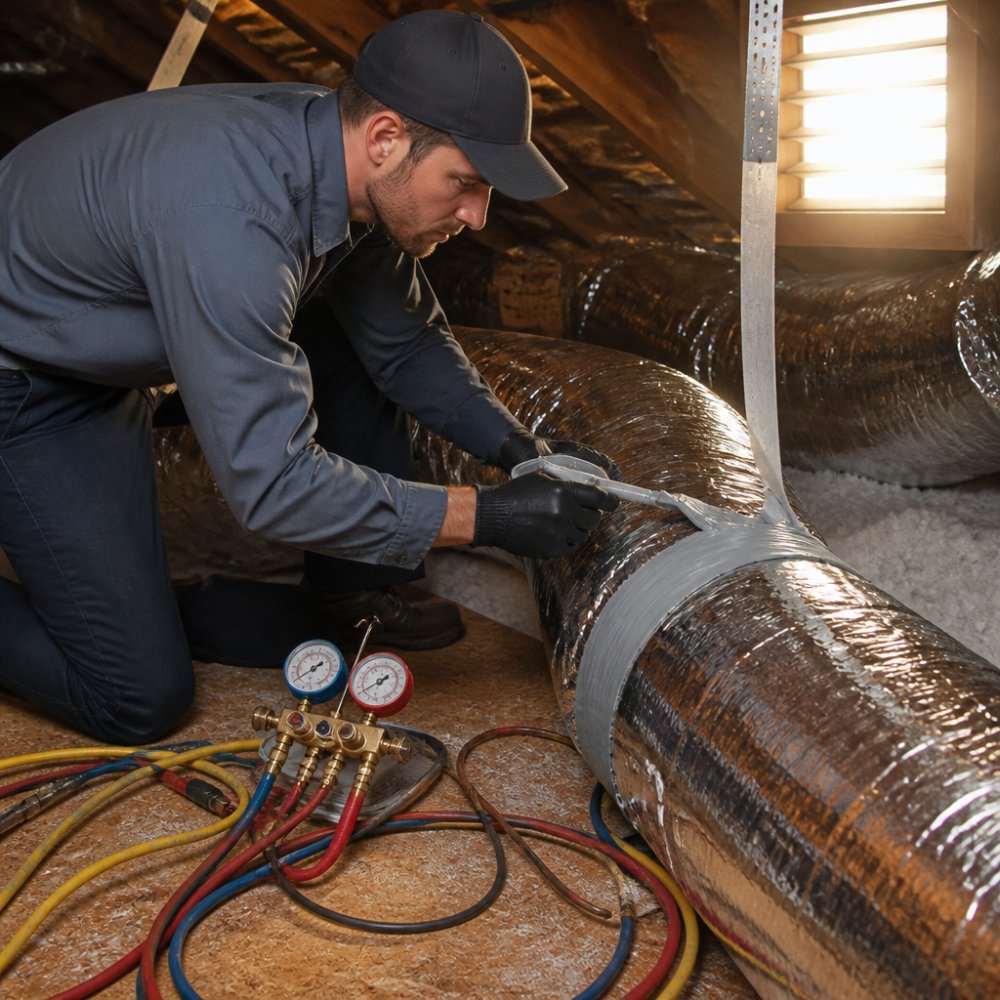
Duct leakage deserves special attention. The U.S. Environmental Protection Agency guidance on duct sealing notes that sealing and insulating ducts in unconditioned spaces improves system performance and indoor air quality.
This is where a family-owned contractor’s reputation matters more than a brand name on the box.
Never accept a quote that skips the load calculation or refuses to show duct leakage measurements. Skipping these steps is the most common reason a new high-efficiency system underperforms its rating within the first year.
Calculate Total Cost of Ownership and Available Incentives
Total cost of ownership beats sticker price every time, but the comparison only becomes useful when you put real numbers on both sides. Add equipment, installation, ductwork corrections, maintenance, expected repairs, and energy costs over the system’s service life, then subtract available incentives.
Build the comparison in five lines
- Equipment and installation: get itemized quotes, not lump sums, so you can see what each contractor includes.
- Duct and envelope corrections: budget for what the load calculation and duct assessment reveal.
- Annual maintenance: plan for a tune-up each spring and fall to protect efficiency and the manufacturer warranty.
- Estimated energy use: compare seasonal energy consumption at local utility rates, not national averages.
- Incentives: check federal tax credits, utility rebates, and state or local programs for the specific equipment model.
A transparent payback example
Suppose you are choosing between a mid-tier two-stage system and a premium variable-speed system. The premium unit costs more upfront, but it may use less energy and hold humidity better. To compare them honestly:
- Estimate annual energy use for each system at your local rates, using the equipment’s rated efficiency and your load calculation.
- Multiply the annual difference by the expected service life, commonly fifteen years for a well-maintained system.
- Add the difference in maintenance and repair costs; variable-speed control boards cost more to replace.
- Subtract any incentive that applies only to the higher-efficiency model.
If the lifetime energy savings plus incentives exceed the higher upfront cost plus higher repair exposure, the premium system pays back. If not, the mid-tier system installed well is the better financial choice. The point is to run the math rather than assume the higher rating wins.
A higher-rated system with a shorter warranty and no maintenance plan can cost more over its life than a mid-tier system installed well and maintained on schedule.
Verify incentives before you sign
Incentive rules change, and eligibility depends on the model’s certified ratings and where you live. The Database of State Incentives for Renewables and Efficiency tracks federal, state, and utility programs, and the IRS guidance on energy efficient home improvement credits covers federal credit eligibility. Verify current amounts and rules before you buy, because a rebate that existed last year may have changed.
Ask each contractor to list the exact model numbers on the quote so you can check incentive eligibility before signing. A model that misses a certification threshold by a fraction can cost you the rebate.
How to Choose Energy Efficient HVAC: A Step-by-Step Checklist
Here is the process we recommend, in order, whether you are replacing a failing system or planning ahead.
- Request a Manual J load calculation in writing before discussing equipment.
- Get a duct assessment covering leakage, insulation, and static pressure.
- Address the envelope first with air sealing and insulation where needed.
- Compare SEER2, HSPF2, and AFUE ratings for the equipment types that fit your climate.
- Decide on staging: single-stage, two-stage, or variable-speed based on humidity and comfort needs.
- Get itemized quotes from licensed contractors, including commissioning steps.
- Verify incentive eligibility for the exact model numbers before signing.
- Schedule maintenance twice a year to protect efficiency and warranty coverage.
If you want a second opinion on a quote or a load calculation, our team can review it with you. We would rather explain the math than sell you a box.
Replacing a heating and cooling system is a decision you live with for fifteen years, and the difference between a good install and a great one shows up on every utility bill.
Frequently Asked Questions
What HVAC efficiency ratings should I look for?
Look at SEER2 for cooling, HSPF2 for heat pumps, and AFUE for furnaces. Higher numbers mean lower operating costs. In 2026, minimum federal standards are 14.3 SEER2 for split ACs in the South and 13.4 SEER2 in the North, with HSPF2 minimums around 7.5 and AFUE at 80% for furnaces. For meaningful savings, aim above the minimum, especially if you plan to stay in the home long term.
How do I know what size HVAC system my home needs?
A proper Manual J load calculation measures your home’s square footage, insulation, window area, ductwork, and local climate to determine heating and cooling capacity. Contractors should not size by square footage alone. An oversized system short cycles, which wastes energy and wears out parts faster. Ask your contractor for the Manual J report before signing, and confirm the equipment model matches the calculated capacity.
Are heat pumps more energy-efficient than furnaces and air conditioners?
Heat pumps typically deliver two to three units of heat per unit of electricity, while furnaces top out near 98% AFUE. That makes heat pumps more efficient for heating in moderate climates. Cold-climate heat pumps now perform well below freezing, but in areas with extended deep cold, a dual-fuel setup pairing a heat pump with a furnace can balance efficiency and comfort. Compare HSPF2 and AFUE ratings side by side for your climate.
How much can an energy-efficient HVAC system save on energy bills?
Savings depend on your current system’s age, efficiency, and installation quality. Moving from an older 10 SEER unit to a 16 SEER2 system can cut cooling energy use significantly, but duct leakage and sizing errors can erase those gains. Ask your contractor to run a load calculation and inspect ductwork before quoting savings. Real numbers come from your home, not a generic percentage.
Does proper HVAC installation affect energy efficiency?
Yes. A high-efficiency unit installed with undersized ducts, refrigerant leaks, or incorrect airflow will underperform a mid-range system installed correctly. Ask for a load calculation, duct inspection, and commissioning report with static pressure and refrigerant charge readings. Installation quality often matters more than the efficiency rating on the box.
What should I ask an HVAC contractor before replacing my system?
Ask for the Manual J load calculation, a duct inspection, and the exact equipment model numbers with efficiency ratings. Confirm they will pull permits, test refrigerant charge, and provide a commissioning report. Request a written quote separating equipment, labor, and any ductwork. Also ask about warranty terms, financing, and whether they service the brand they install. A contractor who skips sizing or duct checks is a red flag.