Last Updated: November 19, 2026
Quick Summary
Homeowners insurance covers emergency HVAC repair only when a covered peril such as fire, windstorm, lightning, or a burst pipe caused the damage. A system that failed from age, wear and tear, or mechanical breakdown is generally excluded, so the cause of damage decides the claim.
- Standard policies cover fire, windstorm, lightning, falling objects, burst pipes, and certain electrical surges.
- Mechanical breakdown, aging equipment, and lack of maintenance are common HVAC exclusions.
- Get a written diagnosis from a licensed technician naming the cause before you file.
- Compare the repair estimate, your deductible, and coverage limits before opening a claim.
- An after-hours emergency service fee is not covered unless a covered peril caused the damage.
Table of Contents
- When Homeowners Insurance Covers Emergency HVAC Repair
- Homeowners Insurance HVAC Exclusions You Need to Know
- Does Homeowners Insurance Cover Furnace Replacement?
- What Insurance Covers for HVAC Replacement
- Filing an Emergency HVAC Repair Insurance Claim
- Emergency HVAC Scenarios: What’s Covered and What’s Not
- Next Steps: Getting Your Emergency HVAC Repair Handled
- Frequently Asked Questions
When Homeowners Insurance Covers Emergency HVAC Repair
The short answer: sometimes. Whether homeowners insurance covers emergency HVAC repair depends on what caused the damage.
Homeowners often assume insurance will handle an HVAC failure, but it does not always apply. Knowing the difference before you file can save time and frustration.
Here is the key distinction: insurance covers sudden damage from a specific event. It does not cover a system that failed because it got old.
Covered Perils: Fire, Windstorm, Lightning, and More
Standard home insurance policies list specific dangers they cover, called covered perils. If one of these damages your HVAC system, the repair is typically covered:
- Fire and smoke damage to the furnace or ductwork
- Windstorm or hail that damages an outdoor condenser unit
- Lightning strikes that fry electrical components
- Falling objects, like a tree limb through the outdoor unit
- Burst pipes that send water into the heating system
- Electrical surges from a covered event that damage controls
A common mistake is assuming a power surge from the grid counts. It often does not unless the surge traces back to a covered peril like lightning. Check your policy terms closely on this one.
Sudden and Accidental Damage vs. Gradual Wear
This is where most claims succeed or fail. Insurance policies generally cover sudden and accidental damage and exclude gradual wear and tear.
Sudden and accidental means the damage happened fast, from one event. A pipe bursts overnight and floods your furnace. A tree falls on the AC unit.
Gradual damage looks different. The system rusted out over years. The motor wore down from age. A small leak dripped for months and rotted the unit.
If you are unsure which category your problem falls into, our team can help. You can read more about recognizing the signs your furnace needs professional repair before you call.
Homeowners Insurance HVAC Exclusions You Need to Know
HVAC exclusions are the fine print that often decides claims. The most common homeowners insurance HVAC exclusions are:
- Wear and tear from normal use over time
- Aging equipment past its expected lifespan
- Lack of maintenance, like skipped tune-ups and dirty filters
- Mechanical or equipment breakdown, meaning the system fails on its own
- Gradual damage that built up slowly, such as rust or corrosion
- Improper installation by a prior contractor
The mechanical breakdown exclusion surprises people most. If your compressor dies on its own, with no fire, flood, or storm involved, that is a mechanical failure your home insurance policy will not pay for.
Some homeowners add equipment breakdown coverage or buy a home warranty. These products work differently from standard insurance and may cover breakdowns your policy excludes. Ask your agent whether either makes sense for your system’s age.
Does Homeowners Insurance Cover Furnace Replacement?
Usually no, not for a furnace that simply aged out. Homeowners insurance covers furnace replacement only when a covered peril destroyed the unit.
Homeowners often hope insurance will cover a failed furnace. In most cases of age-related failure, it will not.
The exception: if a covered event damaged the furnace, replacement is often covered up to your policy limits.
If your furnace is failing and you are weighing repair against replacement, our team can give you a straight answer. Book furnace repair or replacement service and we will tell you what the system actually needs.
What Insurance Covers for HVAC Replacement
When a covered peril destroys your HVAC system, replacement costs are typically addressed under your dwelling coverage, the part of your policy that protects the structure of your home.
A few limits matter here:
- Coverage limits cap how much the policy pays for the structure
- Your deductible comes off the top before insurance pays anything
- Matching quality means the payout covers a similar unit, not a premium upgrade
Damage to the HVAC unit is one thing; resulting damage to the home is another.
If insurance will not cover the full replacement, you still have options. Many homeowners look into financing a new HVAC system without draining savings to spread the cost over time.
Filing an Emergency HVAC Repair Insurance Claim
Filing an emergency HVAC repair insurance claim starts with protecting people and property, then documenting everything before any cleanup. Insurers generally expect policyholders to take reasonable steps to prevent further damage.
Here is a sensible sequence to follow:
- Make the home safe. Shut off power or gas to the unit if you smell gas, see sparks, or suspect a electrical fault. Evacuate and call the utility if you smell gas.
- Stop further damage. Tarp the roof, board broken windows, drain standing water, or shut off the water supply as the situation requires.
- Photograph and video everything before any cleanup, wide shots of the room, close-ups of the unit, the nameplate with model and serial number, and any visible cause such as scorching, water lines, or debris.
- Call a licensed technician for a written diagnosis that names the cause, not just the failed part.
- Contact your insurer and open the claim. Ask whether the policy requires a specific proof-of-loss form and what the deadline is.
- Keep every receipt for temporary repairs, emergency service, lodging, and any equipment rental.
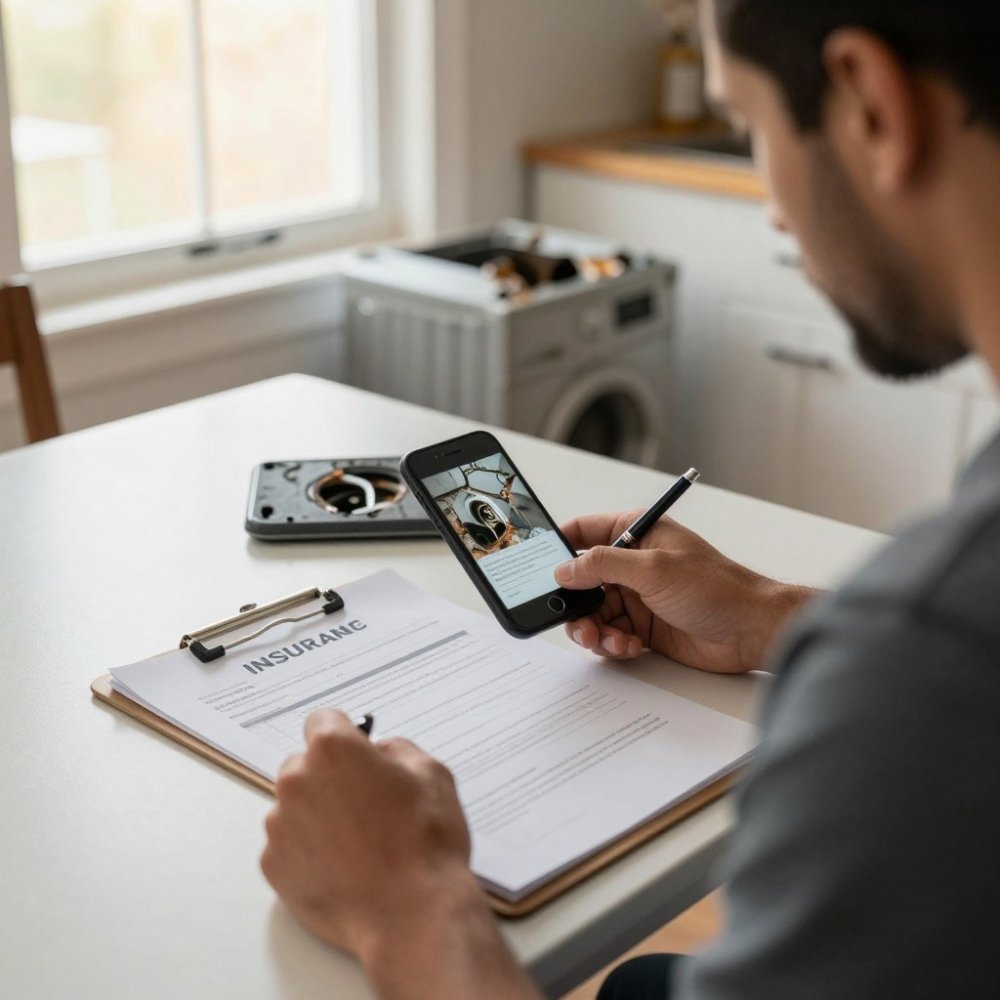
The distinction that trips people up: an emergency service bill is not the same as an insured loss.
Documentation Checklist for Your Claim
Bring this list to your claim and you will avoid the back-and-forth that delays payouts:
- Photos and video of the damage before cleanup, including the unit nameplate
- A written diagnosis from a licensed technician naming the cause
- Your maintenance records showing regular service
- Receipts for temporary repairs and emergency service
- A repair estimate or replacement quote
- Dates and times of the damage and your response
- Your policy number and claim number
- Any proof-of-loss form your insurer requires
Watch out: Skipping the written diagnosis is a common claim mistake. Without a technician stating the cause in writing, the insurer assumes wear and tear and denies the claim. Ask the technician to note the suspected cause, the parts affected, and whether the damage appears sudden or gradual.
Deductible vs. Repair Cost: A Simple Decision Framework
Before you file, compare three numbers: the repair estimate, your deductible, and your coverage limits. If the estimate is close to or below your deductible, filing usually makes little sense, you would pay most of the cost yourself and still carry a claim on your record. If the estimate is well above the deductible and the cause is clearly covered, filing is more likely to help. Ask your agent how a claim could affect your premium before you file.
Temporary Repairs, Mitigation, and Reimbursement
Reasonable steps to prevent further damage, tarping, shutting off water, securing the unit, are often reimbursable under the policy’s mitigation provisions, but rules vary. Keep receipts, photograph the before-and-after, and confirm with your insurer whether they want to inspect before permanent repairs begin. Do not authorize a full replacement before the adjuster has seen the damage unless the insurer tells you to proceed.
Emergency HVAC Scenarios: What’s Covered and What’s Not
Real situations make the rules clearer. Here is how common emergencies usually play out:
| Scenario | Cause | Typically Covered? |
|---|---|---|
| Tree limb crushes outdoor AC unit | Windstorm | Yes |
| Furnace fails at 15 years old | Wear and tear | No |
| Burst pipe floods furnace and floor | Water damage | Yes, both |
| Compressor dies with no event | Mechanical breakdown | No |
| Lightning fries the control board | Lightning | Yes |
| Skipped tune-ups cause motor failure | Lack of maintenance | No |
| Power surge from the grid damages controls | Often excluded unless tied to a covered peril | Check policy |
| HOA-owned rooftop unit fails in a condo | Common property | Depends on governing documents |
The pattern is simple. An outside event that damages the system is usually covered. The system failing on its own is usually not. The cause of damage, not the urgency of the call, controls the outcome.
Renters, Landlords, and Shared or Condo Systems
Responsibility shifts with ownership. A renter’s personal property coverage does not cover the landlord’s HVAC unit; the landlord’s policy on the building generally does. In condos and shared buildings, the split between the HOA’s master policy and the unit owner’s policy depends on the governing documents, sometimes the HOA covers the rooftop unit or common-area portions, sometimes the owner does.
The Deductible Test Before You File
Run one quick comparison before opening a claim: repair estimate versus deductible versus coverage limit. If the estimate is at or below your deductible, paying out of pocket usually avoids a claim without changing your out-of-pocket cost much. If the estimate is well above the deductible and the cause is clearly covered, filing is more likely to help. Many homeowners choose to file claims only for larger covered losses and pay smaller repairs themselves.
Emergency Service Bill vs. Insured Loss
An after-hours or emergency service charge is a fee for speed, not evidence of coverage. Insurance pays for the repair only when a covered peril caused the damage. A furnace that quit on its own is not an insured loss even if the technician arrived at midnight. Keep the emergency service receipt anyway, if a covered peril is later confirmed as the cause, the reasonable cost of emergency service and mitigation may be reimbursable under the policy’s mitigation provisions.
Next Steps: Getting Your Emergency HVAC Repair Handled
When your heat or AC dies, the fastest path is a clear head and a good technician. First, decide whether this is an insurance situation or a repair situation.
1st Service HVAC is a family-owned business with an owner who has over 45 years of HVAC experience. We provide AC repair, furnace maintenance, and energy-efficient system installations with licensed professional technicians.
If you are weighing whether to pay extra for after-hours help, read our guide on whether emergency HVAC service is worth the extra cost. And when you are ready to call, here is a list of emergency HVAC repair services homeowners can call right now.
Frequently Asked Questions
Can I use my homeowners insurance to replace my HVAC system?
Only if the damage was caused by a covered peril such as a fire, windstorm, lightning strike, or sudden water damage. Standard homeowners insurance policies exclude mechanical breakdown, wear and tear, and lack of maintenance, so a system that simply wore out or failed on its own will not be covered. Review your policy’s dwelling coverage section and call your agent to confirm before assuming replacement is covered.
What is the $5,000 rule for HVAC?
The $5,000 rule is a common industry guideline suggesting that if an HVAC repair costs more than $5,000, it may make more sense to replace the unit rather than repair it. This threshold is not a policy term; it is a decision-making heuristic. Your deductible, the age of the equipment, and your policy’s coverage limits should all factor into whether you repair or replace after a covered loss.
Does homeowners insurance cover HVAC damage caused by a power surge?
Many homeowners insurance policies cover sudden damage from electrical surges if the surge is caused by a covered event like a lightning strike. However, some policies exclude damage from utility power surges unless you have equipment breakdown coverage or a specific endorsement. Check your policy’s exclusions and consider adding equipment breakdown coverage if surges are a concern in your area.
Should I call my insurance company before arranging emergency HVAC repairs?
Yes, call your insurer first to confirm whether the cause of damage is covered and to get a claim number. However, if the damage is causing further property damage (such as water leaking into walls), take reasonable steps to prevent additional damage and keep receipts for temporary repairs. Most policies require you to mitigate damage promptly, and those costs may be reimbursable under your claim.
