Table of Contents
- 8 Warning Signs Your Furnace Needs Professional Repair
- What Is the Average Furnace Repair Cost?
- When to Replace vs Repair Your Furnace
- Your Seasonal Furnace Maintenance Checklist
- DIY Troubleshooting vs Professional Safety
- How to Choose a Reliable HVAC Technician
- Frequently Asked Questions
Last Updated: September 25, 2026
8 Warning Signs Your Furnace Needs Professional Repair
Most homeowners wait too long to call for help. By the time the heat stops entirely, a small fix has usually become an expensive one. Knowing the signs your furnace needs professional repair lets you act before a minor issue turns into a mid-winter emergency.
Strange Noises: Rattling, Banging, and Squealing
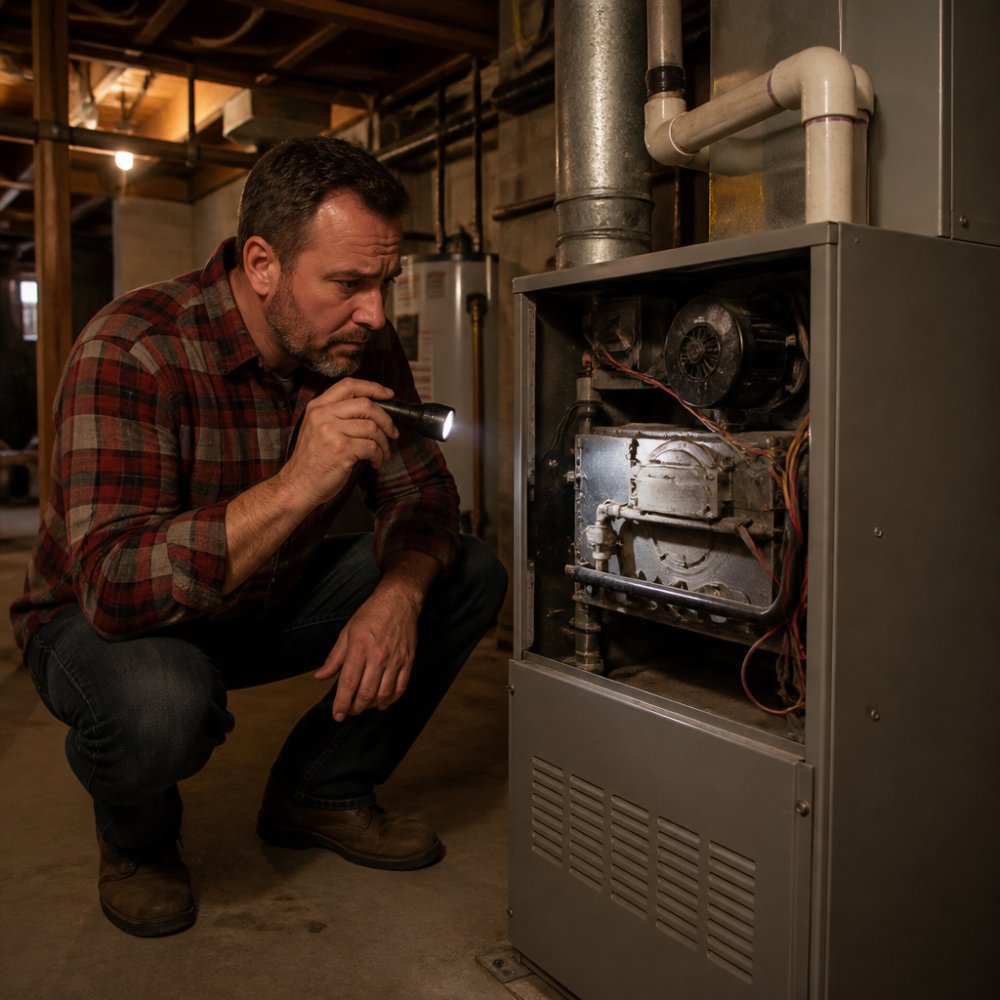
The first sign is sound. A healthy furnace runs with a low, steady hum. New noises mean something has changed.
- Rattling often points to a loose panel or a failing blower motor.
- Banging can signal delayed ignition, where gas builds up before it lights.
- Squealing usually means a worn belt or a dry blower bearing.
Yellow or Flickering Burner Flame
A healthy burner flame is steady and blue. A yellow or flickering flame points to incomplete combustion, which can produce carbon monoxide, an odorless gas that poses a serious safety hazard.
Short Cycling and Uneven Heating
Short cycling means the furnace turns on and off in frequent bursts instead of running full cycles. It strains the system, wastes fuel, and wears out parts faster.
Other signs to watch for:
- Rising energy bills with no change in usage habits
- Frequent repairs or repeat service calls
- Weak or uneven airflow from the vents
- Blowing cold air when the heat is on
- A furnace that is 15 years or older and needs constant attention
If you smell gas or see a yellow burner flame, leave the house and call for emergency service. Do not relight the pilot or restart the system yourself.
What Is the Average Furnace Repair Cost?
There is no single average furnace repair cost, but the range is predictable once you know which part failed. Most residential repairs land somewhere between a routine service call and a larger job, and the spread is driven almost entirely by the component involved.
- Low-cost fixes: clogged air filter, dirty flame sensor, faulty thermostat batteries, tripped limit switch, loose blower panel.
- Mid-range repairs: igniter, inducer motor, blower capacitor, gas valve, control board. These require diagnosis, a specific replacement part, and a return visit if the part is not on the truck.
- High-cost repairs: blower motor, draft inducer assembly, and heat exchanger. The heat exchanger is the outlier, on most units it is not economically repairable at all.
Three variables move the number more than anything else:
- The failed part. A flame sensor costs a fraction of a blower motor.
- The age and model of the unit. Older furnaces use discontinued parts that cost more and take longer to source.
- How quickly you call. A dirty filter caught early is a filter change. The same restriction ignored for a season can overheat the heat exchanger and turn a small fix into a replacement.
The 50% Rule: When a Repair Stops Making Sense
A common framework technicians use is the 50% rule. If the quoted repair costs more than half the price of a new installed furnace, and the unit is already in the back half of its expected lifespan, replacement can often be the more economical choice in the long run.
Consider three numbers before you approve any major repair:
- Repair cost, the written estimate for the fix.
- Remaining lifespan, most furnaces are rated for 15 to 20 years. An older unit has fewer years left to amortize a big repair across.
- Efficiency gap, a new high-efficiency unit can cut heating energy use meaningfully compared to an older standard-efficiency model, which offsets part of the purchase price over time.
A simple way to frame it:
| Unit Age | Repair Cost vs. New Unit | Best Move |
|---|---|---|
| Under 10 years | Any reasonable repair | Repair |
| 10-15 years | Under 50% of replacement | Repair |
| 10-15 years | Over 50% of replacement | Weigh both carefully |
| 15+ years | Any major repair | Lean replace |
| Any age | Cracked heat exchanger | Replace |
Get the diagnosis in writing before any work begins. A trustworthy technician will explain the failed part, show you the evidence, and give you the repair price alongside the replacement price so you can compare. If you only get a total with no breakdown, ask for one.
Before approving any major repair, ask three questions: What part failed? How many years does this unit realistically have left? What would a new unit cost installed? Those three answers tell you whether you are repairing or delaying a replacement.
When to Replace vs Repair Your Furnace
The repair-or-replace decision comes down to three factors: age, repair frequency, and safety.
- Repair if the unit is under 10 years old, the fix is minor, and this is the first problem in years.
- Replace if the furnace is 15 years or older, has needed multiple repairs in two seasons, or has a cracked heat exchanger.
A useful way to frame it:
| Situation | Best Move | Why |
|---|---|---|
| Under 10 years, minor part | Repair | Low cost, years of life left |
| 10-15 years, first major fix | Repair or replace | Depends on repair price |
| 15+ years, frequent breakdowns | Replace | Rising costs, falling reliability |
| Cracked heat exchanger | Replace | Safety hazard, not repairable |
| Rising bills, uneven heat | Diagnose first | Often airflow, not the furnace |
Your Seasonal Furnace Maintenance Checklist
Preventative care is cheaper than emergency repair, and most of what prevents a mid-winter breakdown happens in the fall. A short checklist each season catches the problems that turn into no-heat calls.
- Replace or clean the air filter every 1-3 months (monthly during heavy use or if you have pets)
- Check that vents and returns are open and unblocked by furniture or rugs
- Test the thermostat against a separate room thermometer
- Clear debris, leaves, and snow from the outdoor intake and exhaust
- Listen for new noises on startup
- Watch the burner flame: it should be blue and steady
- Check the condensate line and drain pan on high-efficiency units
- Schedule a professional inspection before the first cold snap
The Heat Exchanger: The Part Most Checklists Skip
The heat exchanger is the metal barrier that keeps combustion gases, including carbon monoxide, separate from the air your family breathes. It is the single most important safety component in the furnace, and it is the one most homeowners never think about until something goes wrong.
Warning signs that point to a heat exchanger problem:
- A yellow or flickering burner flame instead of a steady blue one
- Soot streaks or discoloration around the burner area
- A strange, formaldehyde-like or metallic smell when the heat runs
- Headaches, nausea, or dizziness that ease when you leave the house
- A carbon monoxide alarm that has ever sounded
- Visible cracks, rust, or corrosion on the exchanger surface during inspection
Carbon monoxide is odorless and colorless. Install UL-listed carbon monoxide alarms on every level of the home and outside sleeping areas, test them monthly, and replace the sensors per the manufacturer’s schedule. If an alarm sounds, leave the house and call for emergency service, do not open windows and go back to bed.
Why Seasonal Timing Matters
Schedule the inspection in early fall, before the first cold snap. That is when technicians are least booked and when a problem can be fixed without an emergency premium. A system that gets a fall tune-up is far less likely to fail on the coldest night of the year, when service calls are often in high demand and wait times can be longest.
A fall tune-up is not just about efficiency. It is the only reliable way to inspect the heat exchanger, the combustion system, and the venting, the three components that protect your household from carbon monoxide.
DIY Troubleshooting vs Professional Safety
Some fixes are safe for a homeowner. Others are not, and the line between them is clear.
Safe to do yourself:
- Replace the air filter
- Reset a tripped breaker once
- Change thermostat batteries
- Keep vents and returns clear
Call a professional:
- Anything involving gas, the burner flame, or the pilot light
- A suspected cracked heat exchanger
- Blower motor or electrical work
- Repeated breaker trips
How to Choose a Reliable HVAC Technician
A good technician fixes the problem once. A poor one patches it and returns in two weeks. Here is how to tell them apart before you hire.
- Licensed and insured. Ask for proof. A legitimate company provides it without hesitation.
- Clear diagnosis. They explain the failed part and show you the evidence.
- Written estimate. You get the price before work starts, not after.
- No pressure. They present repair and replacement options, not a hard sell.
- Local and reachable. A company rooted in the community answers when you call.
Frequently Asked Questions
What is the average lifespan of a furnace?
Most furnaces last between 15 and 20 years with regular maintenance. If your system is over 15 years old and needs frequent furnace repair, replacement may be more cost-effective. Annual tune-ups and changing air filters every 1-3 months can extend system lifespan. Inconsistent heating, rising utility costs, and strange noises often signal it’s time to consider an upgrade.
What is the $5,000 rule for HVAC?
The ‘50% rule’ is a general guideline: if the cost of a repair is more than half the price of a new installed furnace, and the unit is already in the back half of its expected lifespan, replacement can often be the more economical choice in the long run. This guideline helps homeowners avoid sinking money into aging equipment that will keep breaking down.
How much does it typically cost to fix a furnace?
The cost of furnace repair varies widely depending on the issue. Simple fixes like a faulty thermostat or clogged filter are typically less involved, while replacing a blower motor or heat exchanger costs more. Pricing depends on parts, labor, and system age. For an accurate quote, contact a licensed HVAC technician who can diagnose the problem in person.
What is the most common furnace failure?
The most common furnace failure is a dirty or clogged air filter, which restricts airflow and causes the system to overheat or short cycle. Other frequent issues include a faulty pilot light or ignition system, a worn blower motor, and a malfunctioning thermostat. Regular furnace maintenance, including filter changes, prevents many of these failures and keeps your system running efficiently.
Your furnace rarely fails without warning. The rattling, the yellow flame, the rising bills, and the cold spots are all early signals, and each one is cheaper to fix now than in January. 1st Service HVAC offers reliable repair for all makes and models, energy-efficient system upgrades, and year-round home comfort from a team of licensed technicians. Call 1st Service HVAC today and get your heating system checked before the first cold snap.