
Last Updated: November 4, 2026
Quick Summary
The most common sign of a failing ac compressor is warm air from the vents, because the compressor stops pumping refrigerant and the system blows air that never gets cold. Other signs include squealing, grinding, rattling or clicking noises from the outdoor unit, a clutch that won’t engage, and intermittent cooling. If the compressor never engages, the compressor or its electrical circuit is the problem.
- A healthy outdoor unit gives a steady hum at startup, while a failing one squeals, grinds, rattles or clicks.
- If the compressor engages but the air stays warm, you likely have a refrigerant leak.
- A seized car AC compressor can drag the drive belt and leave you stranded.
- A breaker that trips repeatedly points to an electrical fault or a compressor drawing too much current.
- A technician checks system pressure, clutch engagement, electrical draw and refrigerant charge to diagnose the problem.
Table of Contents
- 1. Warm Air From the Vents
- 2. Bad AC Compressor Symptoms and Noise You Can Hear
- 3. Bad AC Compressor Clutch Symptoms
- 4. How to Tell If an AC Compressor Is Bad or Needs a Recharge
- 5. Will a Bad AC Compressor Affect the Engine?
- 6. Intermittent Cooling and Other Warning Signs
- 7. Repair, Replacement, and What a Professional Diagnostic Involves
- Book a Compressor Diagnostic With 1st Service HVAC
- Frequently Asked Questions
1. Warm Air From the Vents
Warm air from the vents is the most common sign of a failing AC compressor. When the compressor stops pumping refrigerant, the system blows air that never gets cold. You feel it within minutes on a hot day.
Homeowners often turn on the system, wait, and feel nothing but room-temperature air in early summer. The instinct is to blame the thermostat. Usually it’s not.
Here’s the key distinction. A compressor is the pump that moves refrigerant through your cooling cycle. If it fails, the whole system runs but produces no cold air. A low refrigerant charge can cause the same symptom, which is why diagnosis matters.
Watch out: warm air plus a compressor that never kicks on can mean an electrical fault, not a dead unit. Don’t assume the worst before a technician checks it.
If you want to understand every possible cause before calling, read our guide on why your AC is blowing warm air.
2. Bad AC Compressor Symptoms and Noise You Can Hear
Bad AC compressor symptoms and noise are often the first thing you notice after warm air. The sounds come from the outdoor unit and change as the system strains.
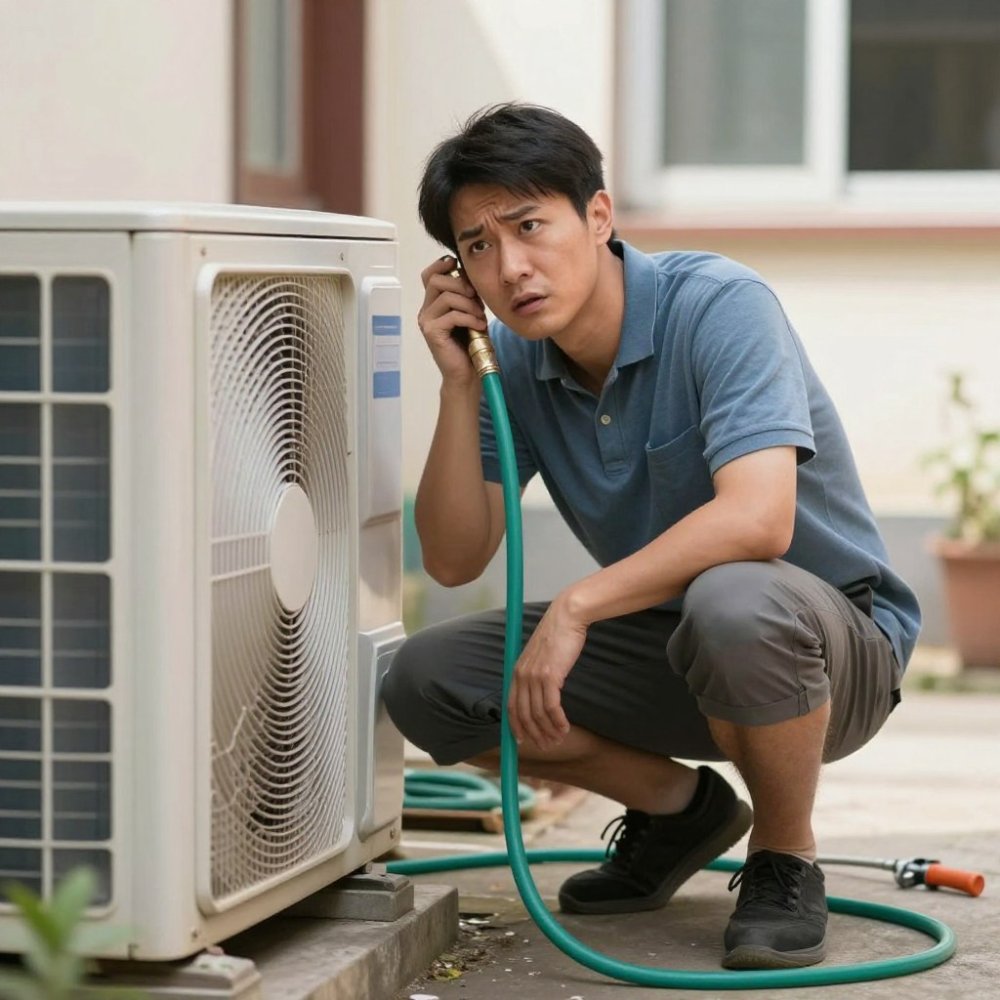
Listen at startup. A healthy unit gives a steady hum. A failing one gives you something else.
Squealing, Grinding, Rattling, and Clicking Explained
- Squealing: a worn or slipping drive belt, or a clutch that won’t grip.
- Grinding: metal-on-metal contact inside the compressor, a serious warning sign.
- Rattling: loose parts, a failing pulley, or debris in the system.
- Clicking: the compressor clutch trying to engage and failing, often an electrical fault.
Any grinding or repeated clicking deserves a professional look. Don’t keep running the system to “see if it clears up.”
3. Bad AC Compressor Clutch Symptoms
Bad AC compressor clutch symptoms show up as a compressor that won’t engage. The clutch is the electromagnetic coupling that connects the pulley to the compressor. When it fails, the pulley spins but the pump does nothing.
Here’s what to watch for:
- The center of the pulley doesn’t spin when the AC is on.
- You hear a single loud click, then nothing.
- Cold air comes and goes as the clutch engages and disengages.
- The belt squeals because the pulley is seizing.
Replacing the whole compressor when only the clutch has failed is a common mistake, so testing clutch engagement and the electrical circuit first is worth asking for.
4. How to Tell If an AC Compressor Is Bad or Needs a Recharge
How to tell if an AC compressor is bad or needs a recharge comes down to one question: is the compressor running at all? If the compressor engages but the air stays warm, you likely have a refrigerant leak. If it never engages, the compressor or its electrical circuit is the problem.
Safe Checks a Homeowner Can Do
These checks are safe and take a few minutes:
- Set the thermostat well below room temperature and confirm the outdoor unit turns on.
- Listen for the click of the clutch engaging.
- Feel the large insulated line at the outdoor unit. It should be cold and sweating.
- Check the circuit breaker for the outdoor unit.
- Look for ice on the indoor coil or refrigerant lines.
- Confirm the air filter isn’t clogged.
Never open the refrigerant circuit or add refrigerant yourself. That work requires a licensed technician and proper equipment. If the line isn’t cold, stop and call a pro.
Reach out to us for more information… →
5. Will a Bad AC Compressor Affect the Engine?
Will a bad AC compressor affect the engine? In a vehicle, yes. A seized car AC compressor can drag the drive belt, and a locked pulley can damage the belt or leave you stranded. In a home system, a failing compressor won’t touch an engine, but it will strain the whole cooling system and raise your energy use.
The symptoms differ between a car and a house. Car air conditioning gives you belt noise, a burning smell, and a compressor that won’t turn. A home system gives you warm air, breaker trips, and longer cooling cycles. Same word, different machine.
If you notice several issues at once at home, the system may simply be aging out. Our guide on the signs of an aging HVAC system walks through the warning signs.
6. Intermittent Cooling and Other Warning Signs
Intermittent cooling means the compressor is cutting in and out instead of running steadily. Cold air arrives, then fades. The system short-cycles and never finishes a full cooling cycle.
Other warning signs include:
- A breaker that trips when the compressor starts.
- The outdoor unit vibrating more than usual.
- Higher electric bills with no change in use.
- The compressor humming but not starting.
- Ice on the lines, then warm air.
A breaker that trips repeatedly points to an electrical fault or a compressor drawing too much current. Reset it once. If it trips again, stop and call a technician.
7. Repair, Replacement, and What a Professional Diagnostic Involves
Repair, replacement, and what a professional diagnostic involves all depend on what the tests show. A technician checks system pressure, clutch engagement, electrical draw, and refrigerant charge. That separates a failing compressor from a leak or a bad clutch.
The decision usually comes down to this:
| What the diagnostic finds | Likely path | Why |
|---|---|---|
| Bad clutch or electrical fault | Repair | Cheaper than a full compressor |
| Refrigerant leak | Repair and recharge | Fixes warm air without replacement |
| Seized or grounded compressor | Replacement | The pump itself has failed |
| Aging system with multiple faults | Weigh repair vs. replacement | Repeated repairs add up |
If you need help fast, contact us for emergency AC repair.
Book a Compressor Diagnostic With 1st Service HVAC
If your AC is blowing warm air and you’ve ruled out the simple checks, it’s time for a proper diagnostic. Our licensed technicians test the compressor, clutch, and charge before recommending anything.
Contact us to schedule a visit and get your home cool again.
Frequently Asked Questions
How can I tell if my AC compressor is bad or just needs a recharge?
A recharge only fixes low refrigerant, which usually means there is a leak somewhere in the system. If the vents blow warm air but the compressor still engages and the outdoor unit runs, low refrigerant is a likely cause. If the compressor never kicks on, trips the breaker, or makes grinding or clicking noises, the compressor itself is suspect. A technician can measure system pressures and check for leaks to confirm which problem you actually have before recommending a repair.
What does a failing AC compressor sound like?
Common bad AC compressor symptoms and noise include a loud humming that will not stop, rattling or clicking at system startup, and squealing or grinding that gets worse as the compressor runs. Clicking often points to the clutch cycling on and off, while grinding can mean internal parts are wearing. Any new noise from the outdoor unit is worth having checked, because catching it early usually means a smaller repair bill.
Will a bad AC compressor affect the engine?
In a vehicle, yes. The compressor is driven by the engine through a drive belt, so a seized compressor or pulley can stall the belt, cause belt noise, or leave you stranded. In a home system, the compressor is separate from anything engine-related, but a failing compressor still strains the rest of the cooling cycle and can shorten the life of other components. Either way, ignoring the signs tends to make the eventual repair more expensive.
Is it safe to keep running my AC if I suspect the compressor is failing?
Short answer: shut it off and get it checked. Running a failing ac compressor can spread debris through the system, which turns a compressor replacement into a much larger repair. If the breaker trips or you smell burning, stop using the system immediately. A professional diagnostic confirms whether the problem is the compressor, the clutch, or something simpler like a refrigerant leak before you spend money on parts you may not need.
Don’t sweat through another hot afternoon guessing at the problem. Get started with 1st Service HVAC and book a compressor diagnostic with a team that fixes it right the first time.
