Last Updated: November 14, 2026
Quick Summary
Good hvac maintenance for rentals means scheduling small seasonal checks so you avoid big emergency bills. Landlords should build a month-by-month checklist that assigns filter changes, coil cleaning and tune-ups to tenants, landlords or licensed technicians. Tenants handle simple tasks like filters and clear vents, while pros handle refrigerant, gas and wiring.
- Tenants typically change air filters every one to three months on a set schedule.
- Keep at least two feet of clearance around the outdoor condenser unit and trim vegetation.
- Book a professional heating tune-up before the first cold snap each fall.
- Never ask tenants to open panels, touch wiring, or add refrigerant.
- Call a professional for refrigerant, gas, wiring, or a system that will not heat or cool.
Table of Contents
- Why HVAC Maintenance Matters for Every Rental Property
- The Seasonal HVAC Maintenance Checklist for Landlords
- Tenant HVAC Maintenance Responsibilities vs. Landlord Duties
- How to Build an HVAC Maintenance Checklist Template for Multiple Properties
- What HVAC Maintenance Cost Looks Like for Rental Properties
- When to Call a Professional vs. What Landlords Can Handle
- Set Up Your Rental Property Maintenance Schedule with 1st Service HVAC
- Frequently Asked Questions
Why HVAC Maintenance Matters for Every Rental Property
A failed air conditioner in July is not just a comfort problem.
Here is what matters most:
- Tenant comfort keeps good renters in place and reduces turnover.
- Equipment lifespan stretches when filters and coils stay clean.
- Energy bills climb fast when airflow is choked.
- Emergency calls cost far more than a routine tune-up.
The U.S. Department of Energy guide to home heating and cooling notes that regular maintenance helps systems run more efficiently and last longer.
Below, we’ll show you how to build a schedule, split duties with tenants, and know when to call a pro. For a deeper walkthrough, see our HVAC Maintenance for Rental Properties: 2026 Guide.
The Seasonal HVAC Maintenance Checklist for Landlords
An HVAC maintenance checklist is a written list of seasonal tasks that keep a heating and cooling system running safely and efficiently.
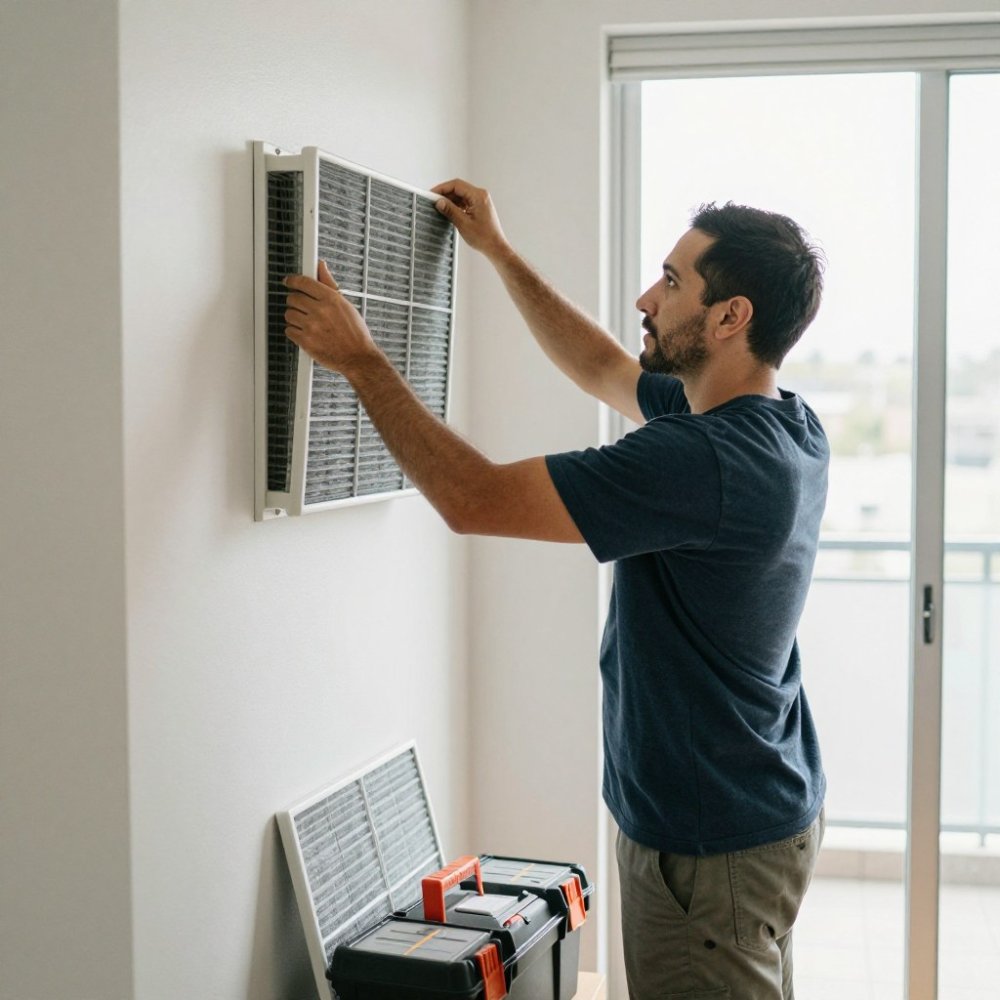
The calendar below is a general sequence for a central forced-air system or heat pump. Adjust the timing to your local climate.
Month-by-Month Landlord HVAC Calendar
| Month | Task | Who Does It |
|---|---|---|
| January | Check filter; confirm heat is running; listen for odd noises | Tenant reports, landlord verifies |
| February | Inspect condensate line for ice or blockage; clear snow and ice from outdoor unit | Landlord |
| March | Replace filter; test cooling on a mild day; clear winter debris from condenser | Tenant + landlord |
| April | Professional cooling tune-up; clean coils; flush condensate drain | Licensed technician |
| May | Confirm two feet of clearance around outdoor unit; trim vegetation | Landlord or tenant |
| June | Replace filter; check airflow at vents; review thermostat program | Tenant + landlord |
| July | Mid-season filter check; watch for leaks or weak cooling | Tenant reports, landlord verifies |
| August | Clear pollen and grass clippings from condenser; check drain pan | Landlord |
| September | Replace filter; test heat on a mild day; clear vents of furniture and rugs | Tenant + landlord |
| October | Professional heating tune-up; inspect heat exchanger and burners | Licensed technician |
| November | Confirm thermostat switches cleanly from cool to heat; check for gas smells | Landlord + tenant |
| December | Replace filter; verify outdoor unit is clear of nests and debris | Tenant + landlord |
Spring and Summer: Cooling System Checks
- Replace the air filter. Check the size printed on the old filter frame.
- Clear leaves, grass, and debris from around the outdoor condenser unit.
- Keep at least two feet of clearance around the unit. Trim back vegetation.
- Pour a cup of water down the condensate drain line to check for clogs.
- Set the thermostat and confirm the cooling system starts and cools.
- Listen for odd noises and check for weak airflow at the vents.
Fall and Winter: Heating System Checks
- Swap the filter again before the heating season.
- Test the furnace or heat pump on a mild day, before you need it.
- Clear vents and returns of furniture, rugs, and dust.
- Check the outdoor unit for nests, debris, and bent fins.
- Confirm the thermostat switches cleanly from cool to heat.
- Book a professional tune-up before the first cold snap.
Adjust the Calendar for System Type and Occupancy
The same calendar does not fit every property. A few adjustments matter most:
- Heat pumps run year-round, so filter changes and coil cleaning matter in every season.
- Furnaces need the heat exchanger and burners checked by a technician before the first cold snap; that is a safety check, not just a tune-up.
- Central air depends on a clear outdoor condenser and a clean condensate drain; both clog faster in humid months.
- Mini-splits have washable filters in each indoor head, and each head needs its own cleaning schedule.
- Pets and high occupancy shorten filter intervals; a home with two shedding dogs may need a change every month rather than every three.
Tenant HVAC Maintenance Responsibilities vs. Landlord Duties
The cleanest way to avoid arguments is a written split of duties in the lease. Tenants handle simple, safe tasks.
Tenant HVAC maintenance responsibilities usually include:
- Changing the air filter on a set schedule, often every one to three months.
- Keeping vents and returns clear of furniture and rugs.
- Reporting strange noises, smells, leaks, or weak airflow right away.
- Setting the thermostat within a reasonable range.
Landlord duties cover the rest:
- Scheduling professional inspections and tune-ups.
- Paying for repairs and equipment replacement.
- Keeping the outdoor unit clear and safe.
- Tracking service records for each property.
Put the filter size and change interval in the lease. A tenant who knows the exact filter size is far more likely to actually change it.
Watch out: never ask a tenant to open panels, touch wiring, or add refrigerant. Those tasks belong to a licensed technician.
How to Build an HVAC Maintenance Checklist Template for Multiple Properties
An HVAC maintenance checklist template is a reusable form that lists every task, the date it was done, and who did it, for each unit you own. With several properties, a shared template is the difference between organized and chaotic, ideally one record per unit that follows the equipment from install to replacement.
Build yours with these fields:
- Property address and unit number
- System type: air conditioner, furnace, heat pump, or mini-split
- Equipment make, model, and install date
- Filter size and change interval
- Seasonal task list with checkboxes
- Date completed and initials
Then set a simple calendar for each unit:
| Season | Key Tasks | Who Does It |
|---|---|---|
| Spring | Filter change, outdoor unit clear, drain check | Tenant + landlord |
| Summer | Cooling test, airflow check, thermostat review | Landlord or pro |
| Fall | Filter change, heating test, vent clearing | Tenant + landlord |
| Winter | Heating tune-up, emergency check | Licensed technician |
Keep one folder per property, digital or paper. When a tenant reports a problem, you will know exactly when the system was last serviced.
Track Records Across Every Unit
A template only pays off if it is the same for every property. Use one shared spreadsheet or property-management app with a tab or record per unit, and log these fields every time work is done:
- Service date and task performed
- Technician or vendor and invoice number
- Parts replaced and whether they were under warranty
- Filter size and the date the next change is due
- Any recurring issue, such as a drain that clogs every summer
Plan for Equipment Life and Replacement
Routine maintenance is only half of lifecycle planning. The other half is knowing how old each system is and what it will cost to replace.
Budget in three buckets:
- Routine care: filters, coil cleaning, drain flushing.
- Professional service: seasonal tune-ups and inspections.
- Reserve fund: money set aside for repairs and eventual replacement.
For replacement benchmarks to plan around, see our guide to the cost of HVAC system replacement in 2026. It helps you decide whether to repair or replace when a system nears the end of its life.
Give Tenants a Reporting and Triage Path
A tracking system is only as good as the reports that feed it. Give tenants one clear way to report a problem, and a short decision tree for what counts as an emergency:
- No cooling or no heat in extreme weather: call the technician promptly; this is an emergency.
- Water leaking from the unit or ceiling: shut off the system if safe and call promptly; water damage compounds fast.
- Gas smell or burning odor: leave the unit off, ventilate, and call the gas utility or a technician immediately.
- Unusual noise, weak airflow, or a system that runs but does not condition: log a routine repair request; schedule within a few days.
- Filter change due: tenant task per the lease; log the completion date.
Watch out: a triage list that tells tenants to diagnose the problem themselves invites unsafe repairs. Keep the list to symptoms and next steps, and route anything involving refrigerant, gas, wiring, or panels to a licensed technician.
What HVAC Maintenance Cost Looks Like for Rental Properties
HVAC maintenance cost for rentals depends on the system type, the number of units, and how much work is needed. For a quote on your properties, contact 1st Service HVAC directly.
Plan your budget in three buckets:
- Routine care: filters, coil cleaning, drain flushing.
- Professional service: seasonal tune-ups and inspections.
- Reserve fund: money set aside for repairs and eventual replacement.
For replacement benchmarks to plan around, see our guide to the cost of HVAC system replacement in 2026. It helps you decide whether to repair or replace when a system nears the end of its life.
When to Call a Professional vs. What Landlords Can Handle
Call a professional for anything involving refrigerant, gas, wiring, or a system that will not heat or cool.
Safe for landlords and tenants:
- Changing air filters
- Clearing debris and vegetation around the condenser
- Flushing the condensate drain with water
- Adjusting thermostat settings
- Visual checks for damage or leaks
Call a licensed technician for:
- Refrigerant leaks or low charge
- Gas smells or furnace problems
- Electrical issues or tripped breakers
- A system that runs but does not cool or heat
- Any strange noise, smell, or water leak
Before you hire, know the signs of a good contractor. Our guide to signs of an honest HVAC contractor covers what to ask and what red flags to watch for.
For a full breakdown of what belongs on a seasonal list, read is an AC maintenance checklist worth the effort.
Set Up Your Rental Property Maintenance Schedule with 1st Service HVAC
The hardest part of rental HVAC care is not knowing what to do.
At 1st Service HVAC, we are a family-owned business with licensed technicians. We handle AC repair, furnace maintenance, and energy-efficient system installations for homes.
If you are comparing providers, our guide to the CSI HVAC alternative for landlords shows what to compare before you switch.
A rental HVAC system only stays reliable when someone is watching it.
Frequently Asked Questions
Who is responsible for HVAC maintenance, the landlord or the tenant?
It depends on the lease, but most landlords keep major HVAC maintenance on their side. A common split: the landlord pays for professional tune-ups, repairs, and filter changes between tenants, while the tenant handles simple tasks like replacing filters monthly and keeping vents unblocked. Put the division in writing in the lease so there is no confusion. Tenant HVAC maintenance responsibilities should be spelled out clearly, including how to report a problem and what counts as an emergency.
How often should landlords schedule HVAC maintenance for rental properties?
Schedule professional HVAC maintenance twice a year: once in spring before cooling season and once in fall before heating season. Between visits, tenants should replace air filters every 30 to 90 days depending on the filter type and whether pets are present. If you own multiple properties, stagger the appointments so you are not booking every unit in the same week. A consistent HVAC maintenance checklist keeps small issues from turning into emergency service calls.
How much does HVAC maintenance cost for a rental property?
HVAC maintenance cost varies by system type, unit count, and what the visit includes, so there is no single figure that fits every property. Routine tune-ups generally cost less than emergency repairs, and catching problems early usually saves money over the life of the equipment. For a quote on your rental units, contact 1st Service HVAC directly. Budgeting for two professional visits a year plus a small reserve for repairs is a practical starting point.
What are the most common HVAC maintenance mistakes landlords should avoid?
The biggest mistakes are skipping seasonal tune-ups, letting tenants handle repairs they are not qualified for, ignoring dirty filters, and failing to document service history across properties. Landlords also often forget to clear vegetation and debris around outdoor condenser units, which strains the system. Another common error is waiting until the HVAC breaks down completely before calling a technician. A written HVAC maintenance checklist template for each property prevents these gaps.
