
Table of Contents
- What Superior Heating Really Means for Homeowners
- Heating Alternatives Compared: Heat Pumps, Propane, and More
- Signs of Dishonest HVAC Technicians to Watch For
- Questions to Ask an HVAC Contractor Before You Hire
- When an HVAC Second Opinion Saves You Money
- Your HVAC Repair Estimate Checklist
- Rebates, Tax Credits, and Financing for Heating Upgrades
- Conclusion: Choosing the Right Heating Alternative
- Frequently Asked Questions
Last Updated: October 12, 2026
What Superior Heating Really Means for Homeowners
“Superior heating” is not a brand name, it describes a system that keeps every room comfortable through the coldest weeks, runs without constant repair calls, and does not wreck your monthly budget.
What homeowners want is a system that matches their house, climate, and budget.
Below, we compare the main heating alternatives side by side, then walk through how to vet contractors, spot dishonest technicians, and stack rebates and financing so the upgrade pays for itself faster.
“Superior heating” is a fit question, not a product question. The right system depends on your home’s insulation, your climate, and how you use the space, not on which technology sounds most advanced.
Heating Alternatives Compared: Heat Pumps, Propane, and More
Home heating alternatives fall into two families: systems that move heat (air-source and ground-source heat pumps, ductless mini-splits) and systems that create heat by burning fuel or running electricity through resistance (gas, propane, and oil furnaces, boilers, electric resistance). Each has a different cost profile and climate sweet spot.
Here is how the main options stack up at a glance.
| System | How It Works | Best For | Watch Out For |
|---|---|---|---|
| Air-source heat pump / mini-split | Moves heat between outdoor air and indoors | Mild to moderate winters, homes without ductwork | Output and efficiency drop in extreme cold; often needs a backup |
| Ground-source (geothermal) heat pump | Moves heat between the ground and indoors | Homes with yard space and a long horizon | Highest upfront cost; ground loop or well required |
| Gas furnace | Burns natural gas in a central unit | Homes with existing gas lines and ductwork | Requires a gas connection; venting and combustion air matter |
| Propane furnace or stove | Burns propane delivered to a tank | Rural homes without natural gas | Fuel delivery, tank logistics, and price swings |
| Oil furnace | Burns heating oil from a tank | Older homes already set up for oil | Tank maintenance, fuel storage, and odor |
| Electric furnace / resistance heat | Converts electricity directly to heat | Small spaces, backup heat, mild climates | Highest operating cost per unit of heat |
| Radiant / underfloor heating | Warms floors or panels directly | Additions, bathrooms, targeted comfort | Higher installation complexity; slow to respond |
| Wood or pellet stove | Burns split firewood or pellets | Rural homes with fuel access | Manual labor; local air quality rules |
Match the System to Your Climate, Not the Brochure
Manufacturer marketing assumes a mild climate. Start with how cold it gets where you live and how well your house holds heat.
- Mild winters, mild summers. A standard air-source heat pump is the strongest all-around choice because it also cools. Ductless mini-splits suit homes without ductwork or room-by-room zoning.
- Cold winters with a deep-freeze season. A cold-climate-rated heat pump can carry most of the load, but plan on a backup, gas furnace, propane furnace, or electric resistance strips, for the coldest stretches. The backup is part of the design, not a failure.
- Very cold and rural, no natural gas. Propane, oil, or a wood/pellet stove are the practical options. A dual-fuel setup pairs a propane furnace with a heat pump so the heat pump carries mild weather and the furnace takes over in the cold.
Retrofit Compatibility: What Your House Will Actually Accept
Before you fall in love with a system, check what your house can support. This is where most upgrades stall.
- Ductwork. A central furnace or ducted heat pump needs ducts sized, sealed, and insulated well enough to deliver the heat you paid for. Leaky, undersized ducts waste a meaningful share of it. If your ducts are in bad shape, ductless mini-splits may be cheaper.
- Electrical capacity. Heat pumps, electric furnaces, and resistance heat draw serious amperage. An older 100-amp service may need an upgrade first, a real line item, not a footnote.
- Fuel availability. If the natural gas main is not at your street, propane or oil is the practical alternative, and you will need space for a tank and delivery access.
Total Cost of Ownership, Not Just the Sticker
The purchase price is only the first number. Add up five buckets over the system’s life:
- Installation, equipment, labor, any electrical or ductwork changes, and permit fees.
- Fuel or electricity, the recurring cost, which depends on your local rates and how hard the system works in your climate.
- Maintenance, annual service, filter changes, and for fuel-burning systems, combustion and venting checks.
- Repairs, heat pumps and furnaces both have moving parts; the failure profile differs by system.
- Replacement, most systems last roughly 15 to 20 years, and the replacement cost is not zero.
Because fuel and electricity rates vary by region and change over time, the cheapest system to install is rarely the cheapest to own. A heat pump that costs more upfront often wins on operating cost in a moderate climate; a propane or oil furnace may win upfront but lose over a decade of fuel bills. Run the numbers with your own rates, not a national average.
Emissions and Environmental Trade-Offs
“Electric equals clean” is an oversimplification. A heat pump’s real-world emissions depend on its efficiency and how your grid generates electricity. In coal- or gas-heavy regions, a heat pump still usually beats resistance heat and often beats a fuel-burning furnace, but by a smaller margin than marketing suggests. Cleaner grids widen the advantage. Ground-source systems have the lowest operational emissions of the heat pump family because they work against stable ground temperatures.
The right system is the one that fits your climate, your ducts, your electrical service, and your budget, not the one with the best brochure. Compare total cost of ownership over 15 to 20 years, not the installation quote alone.
Heat Pumps and Mini-Splits
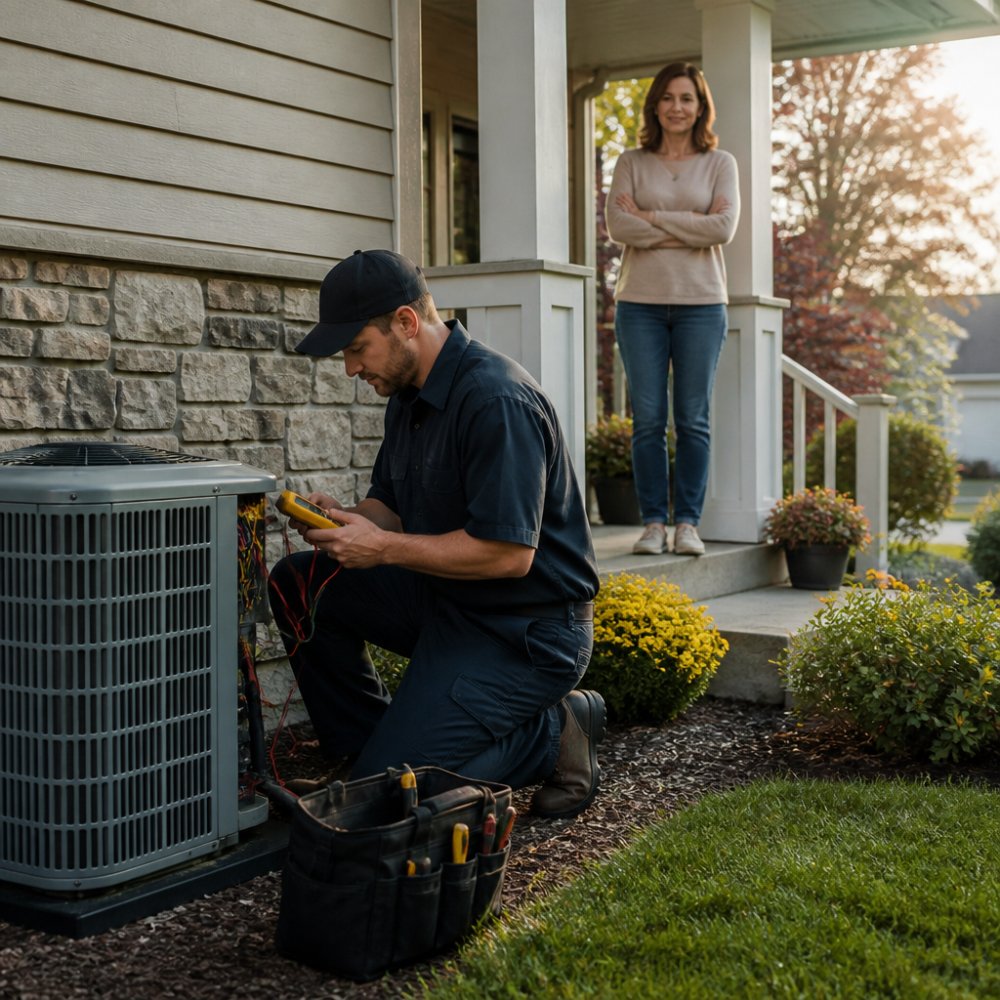
Heat pumps are the most efficient heating alternative for most homes in moderate climates. Instead of generating heat, they move it, pulling warmth from outdoor air (or the ground) and transferring it inside.
Mini-splits are the ductless version, ideal for homes without ductwork, additions, and rooms that never get comfortable with central heat. Each indoor head serves a zone, so you need one per area.
Consumer Reports whole-house heat pump ratings reviews tested models and notes that rated units are often intended for homes in the 1,500 to 1,800 square foot range, which is a useful benchmark when sizing your own system.
Gas, Propane, and Oil Furnaces
Fuel-burning furnaces remain the standard in homes already set up for them. A gas furnace is the cheapest to run where natural gas is available.
Oil furnaces serve older homes with existing tanks. They work well, but fuel storage and tank upkeep add ongoing chores.
The catch with all three: efficiency depends on ductwork condition. Leaky ducts can waste a meaningful share of the heat you paid for before it ever reaches a room.
Skipping a duct inspection before choosing a new furnace is one of the most expensive mistakes homeowners make. A high-efficiency unit connected to leaky, undersized ductwork will underperform and inflate your heating bills, sometimes badly enough that the upgrade feels like it never happened.
Signs of Dishonest HVAC Technicians to Watch For
Dishonest technicians share recognizable patterns: they pressure you toward a full replacement when a repair would do, quote vague prices that grow once work begins, or refuse to put findings in writing. Watch for these red flags:
- Instant diagnosis without inspection. A real diagnosis involves testing, not a glance at the unit.
- Pressure to decide today. Legitimate urgency exists in a true emergency, but “today only” pricing on a non-emergency replacement is a sales tactic.
- No written estimate. Verbal quotes leave you with no protection.
The best defense: ask for the diagnosis in writing, get a second opinion on anything over a few hundred dollars, and never let anyone rush a same-day decision on a major system.
Reach out to us for more information… →
Questions to Ask an HVAC Contractor Before You Hire
Ask these before you let anyone touch your system. The answers tell you more than any advertisement.
- Are you licensed and insured? Ask for the license number and verify it.
- Who will actually do the work? Employees or subcontractors? The answer affects accountability.
- Will I get a written estimate before work starts? Get a firm yes.
- What’s your warranty on parts and labor? Parts warranties are common; labor warranties vary widely.
- Do you offer emergency and weekend service? Important if your system tends to fail during heat waves or cold snaps.
- How do you handle a repair that doesn’t fix the problem? A fair contractor stands behind the work.
- Can you show me the load calculation for a replacement? Sizing should be based on your home, not a rule of thumb.
That last question separates real contractors from order-takers. A proper replacement starts with a load calculation, not a guess based on the old unit’s label.
Ask for the load calculation in writing before a replacement quote. If a contractor can’t or won’t produce one, that’s your signal to keep looking. Sizing a system by square footage alone leads to short cycling in summer and cold rooms in winter.
When an HVAC Second Opinion Saves You Money
A second opinion pays for itself when a contractor recommends a full replacement, quotes a repair above a few hundred dollars, or can’t explain what failed. Here’s a simple framework:
| Situation | Get a Second Opinion? | Why |
|---|---|---|
| Repair quote under $300 | Usually not | The cost of a second visit outweighs the savings |
| Repair quote over $500 | Yes | Diagnosis errors are common and expensive |
| Full replacement recommended | Always | Biggest dollar decision; verify sizing and diagnosis |
| Contractor won’t explain the failure | Yes | Unexplained diagnoses are a red flag |
| System is under 10 years old | Yes | Premature replacement is often unnecessary |
To make a second opinion useful, share the first contractor’s written findings so the second technician can confirm or challenge the diagnosis instead of starting from scratch.
Your HVAC Repair Estimate Checklist
An HVAC repair estimate should be detailed enough to compare line by line against another quote. Use this checklist:
- Contractor name, license number, and contact information
- Date of inspection and technician name
- Description of the problem in plain language
If an estimate is missing more than two of these items, ask for a revised version before approving anything. A contractor who resists putting details in writing is telling you something.
Rebates, Tax Credits, and Financing for Heating Upgrades
Incentives can offset a meaningful share of a heating upgrade, but the details change and the amounts vary by program and year. The IRS energy efficient home improvement credit page and ENERGY STAR rebate finder are the two best places to check current eligibility before you commit to a system.
The Three Layers of Incentives
Most homeowners can stack three layers:
- Federal tax credits. The federal energy efficient home improvement credit reduces what you owe, so you need tax liability to use it. Eligibility is tied to specific efficiency ratings. Check the IRS page for current rules, caps, and qualifying improvements before you buy.
- State and utility rebates. Many states and utilities rebate high-efficiency heat pumps, furnaces, and insulation. These are usually paid after installation, often require a licensed contractor and a receipt, and sometimes require pre-approval, skipping it is a common reason rebates get denied.
- Manufacturer promotions. Equipment makers periodically run their own rebates or financing on specific models, separate from government programs and often with short windows.
How to Sequence the Money Side
Order matters. Choosing a system before checking incentives can cost you thousands in missed credits, because qualifying models are not always the ones a contractor recommends first.
- Check federal credits first. The IRS page lists qualifying improvements and current terms.
- Search your utility’s rebate list for high-efficiency heat pumps and furnaces.
- Check your state energy office. State programs often add to utility rebates and may have income-based tiers.
- Ask your contractor which installed models qualify. Eligibility is tied to specific efficiency ratings, not just system type. Get model numbers in writing.
- Confirm pre-approval requirements. Some rebates require approval before installation; without it, you may forfeit the money.
- Keep every receipt and certification for claiming credits and rebates.
Financing Options Compared
If you are not paying cash, financing affects the real cost as much as the equipment.
- Contractor financing. Convenient and often promoted at the point of sale, but rates and terms vary. Ask for the APR, term length, and whether there is a prepayment penalty.
- Home equity loan or line of credit. Typically the lowest rate for homeowners with equity, and the interest may be tax-deductible depending on use and your tax situation. Consult a tax professional.
- Manufacturer or utility on-bill financing. Some utilities let you repay upgrades on your monthly bill. Convenient, but check the effective interest rate.
A Note on Timing
Incentive programs have funding limits and expiration dates, one well funded in spring can be exhausted by fall. If a rebate is central to your decision, confirm it is still active and funded before signing, and have the contractor note qualifying model numbers on the estimate as a paper trail.
Ask your contractor to list the qualifying model numbers and efficiency ratings on the written estimate. That single line item is what you will need to claim a federal credit or a utility rebate, and it is the easiest thing to forget to request.
Conclusion: Choosing the Right Heating Alternative
The hardest part of choosing an alternative heating system is separating genuine recommendations from sales pressure. The right answer depends on your home, climate, and budget, not on which technology is trending.
At 1st Service HVAC, we help homeowners in Richmond and the surrounding counties sort through those trade-offs.
Call 1st Service HVAC for a straightforward evaluation of your heating options and a clear, written estimate.
Frequently Asked Questions
What can I use to heat my house without electricity?
Propane and wood stoves do not rely on the electric grid for heat output, though most still use a small electric blower. Propane delivers more heat per unit of energy than electricity, so a propane stove or wall heater can keep a room warm during an outage. For whole-home backup, a propane or oil furnace with a battery backup for the blower is a practical option. Always vent fuel-burning appliances properly and keep a carbon monoxide detector on every level.
How can I compare HVAC contractors fairly?
Get written estimates from at least three licensed contractors and compare the scope, not just the bottom line. Ask each one to list equipment model numbers, labor hours, warranty terms, and whether they will pull a permit. Check state licensing and insurance, then read recent reviews for patterns. A contractor who explains why a repair is needed and shows you the failed part is usually a safer bet than one who pressures you to sign the same day.
Should I get a second opinion on an HVAC repair estimate?
Yes, especially if the estimate exceeds $1,500 or the diagnosis is vague. A second opinion from a different licensed contractor often reveals whether a repair is truly necessary or whether a less expensive fix will work. Bring the first estimate and ask the second technician to inspect the same components. If both agree, you can proceed with confidence. If they disagree, ask each to explain the diagnostic steps they took.
What should an HVAC repair estimate include?
A complete HVAC repair estimate should list the diagnostic findings, the specific parts to be replaced with model numbers, labor hours, refrigerant or fuel charges, permit fees if required, and the total cost. It should also state the warranty on parts and labor, and whether the price is fixed or subject to change. If any of these items are missing, ask for a revised written estimate before you authorize work.
When should I replace my furnace instead of repairing it?
If your furnace is 15 years or older and the repair costs more than a third of a new unit, replacement usually makes more sense. Frequent breakdowns, rising energy bills, and uneven heating also point toward replacement. A heat pump or high-efficiency furnace can cut operating costs, and federal tax credits may offset part of the upfront price. Ask your contractor to compare the 10-year cost of repairing versus replacing before you decide.