Last Updated: October 23, 2026
Quick Summary
Call for emergency ac repair if simple checks like thermostat batteries, the breaker, and a clogged filter do not restore cooling within 30 minutes. Heat exposure is a genuine health risk, especially for infants, older adults, and anyone with a chronic condition.
- Check thermostat batteries, the breaker, and the air filter before calling for service.
- Never reset a tripped breaker more than once, as repeat trips signal a serious fault.
- Shut the system off at the thermostat if the outdoor fan will not spin.
- Have your address, system brand and age, and symptom details ready when you call.
- True emergencies in extreme heat often get same-day service, sometimes within hours.
Table of Contents
- What to Do When Your AC Stops Working: First Steps
- AC Not Cooling Troubleshooting: Checks Before You Call
- How to Tell If You Need Emergency AC Repair
- What to Have Ready When You Call for Emergency AC Repair
- AC Repair Response Time: What to Expect in Madison County
- Air Conditioner Repair Cost: What Affects the Bill
- Staying Cool While You Wait for the Technician
- Conclusion
- Frequently Asked Questions
What to Do When Your AC Stops Working: First Steps
When your AC quits on a 95-degree afternoon, the first hour matters. Acting fast protects your family from heat illness and prevents small problems from becoming expensive ones. This guide from 1st Service HVAC walks you through exactly what to do, from the first sign of trouble to the moment a technician arrives.
Emergency AC repair is the priority when indoor temperatures climb and vulnerable household members are at risk. Here is your immediate sequence:
- Check the thermostat batteries and settings before anything else
- Confirm the breaker for the outdoor unit has not tripped
- Replace a clogged air filter, a common cause of weak airflow
- Move family members to the coolest room or a neighbor’s home if heat is severe
If none of these restore cooling within 30 minutes, call for emergency AC repair rather than waiting overnight. Heat exposure is a genuine health risk, especially for infants, older adults, and anyone with a chronic condition. The CDC heat safety guidance explains who faces the greatest danger and how to spot warning signs.
One point most homeowners miss: a system that runs but blows warm air is often a refrigerant or compressor issue, not a thermostat problem. That distinction changes what you should do next.
Never keep resetting a tripped breaker more than once. A breaker that trips repeatedly signals a short or a failing compressor. Forcing it back on can damage the unit and create a fire hazard.
AC Not Cooling Troubleshooting: Checks Before You Call
AC not cooling troubleshooting starts with the simple, free checks that resolve a surprising share of service calls. Before you pay for a visit, run through the basics: thermostat settings, filter condition, breaker status, and outdoor unit clearance.
Work through this checklist in order:
- Thermostat: Set it to “cool” and lower the target temperature a few degrees below room temperature. Fresh batteries fix more “dead system” calls than homeowners expect.
- Air filter: A clogged filter chokes airflow and can freeze the indoor coil. Replace it if it looks gray or matted.
- Breaker: Find the breaker labeled for the AC and check whether it sits in the middle position. Reset it once.
- Outdoor unit: Clear leaves, grass clippings, and debris from around the condenser. Give it at least two feet of breathing room.
- Condensate line: A clogged drain line can trigger a safety shutoff. Look for standing water near the indoor unit.
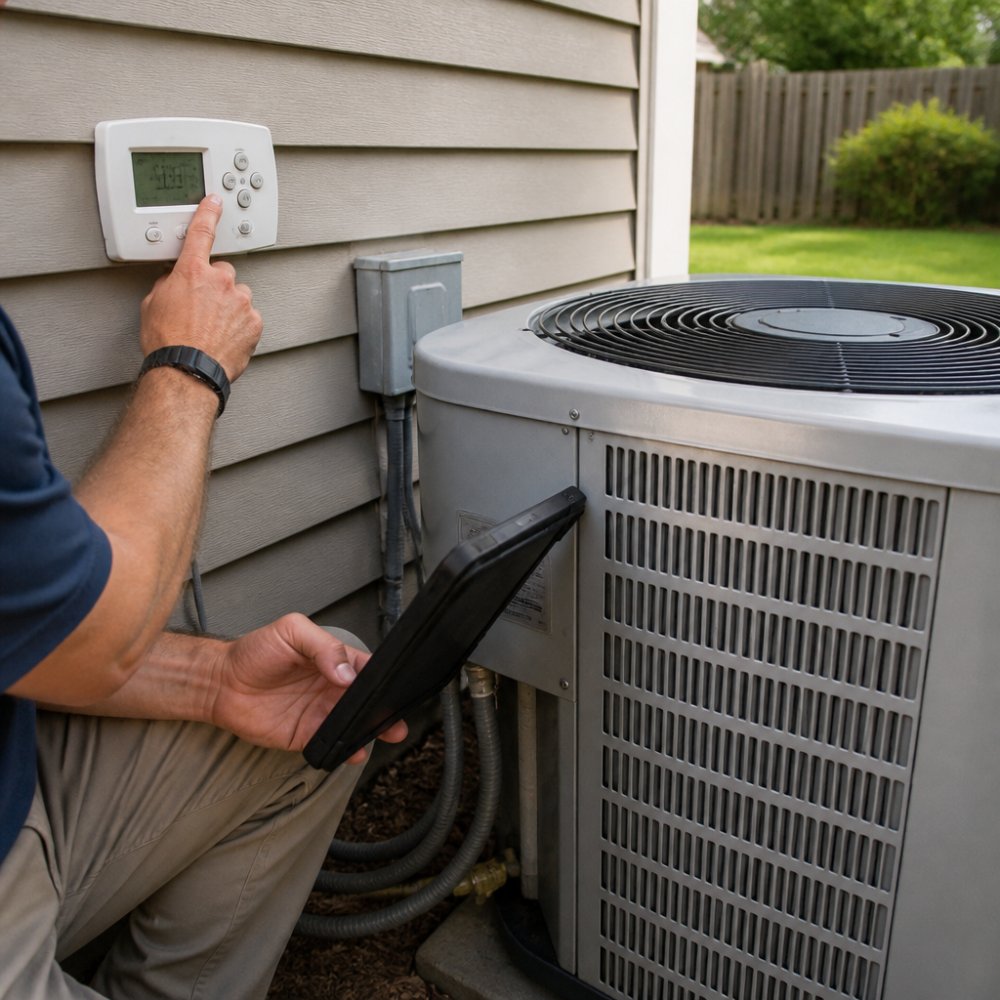
If the system still will not cool after these steps, the problem likely sits in the refrigerant circuit, the compressor, or the control board. Those are jobs for a licensed technician, not a weekend project.
How to Tell If You Need Emergency AC Repair
You need emergency AC repair when cooling loss creates a health risk or points to a dangerous fault. Not every breakdown is an emergency, but some demand a same-day call.
Call right away if you notice any of these:
- Indoor temperatures climbing above 85 degrees with no relief
- Infants, older adults, or anyone with a heat-sensitive medical condition in the home
- Burning smells, smoke, or scorch marks near the unit
- Water pooling around the indoor air handler
- Loud grinding, screeching, or repeated breaker trips
A system that is merely underperforming, cooling weakly but still running, can usually wait for a scheduled appointment. A system that has stopped entirely in peak summer heat is a different story.
If your outdoor unit hums but the fan will not spin, shut the system off at the thermostat. A seized fan motor can overheat the compressor within minutes, turning a modest repair into a full replacement.
What to Have Ready When You Call for Emergency AC Repair
A ready list speeds up dispatch and helps the technician arrive prepared. Have these details on hand before you dial:
- Your full service address and the best contact number
- The brand and approximate age of your system
- A short description of the symptoms and when they started
- Whether the outdoor unit is running, humming, or silent
- Any recent repairs, filter changes, or thermostat adjustments
When you call 1st Service HVAC, our team asks these questions to route the right technician and the right parts to your door. A family-owned shop with an owner who brings over 45 years of HVAC experience knows how much a five-minute conversation saves on a 100-degree day.
Also confirm access: will the technician be able to reach the indoor unit and the outdoor condenser? Clear a path and unlock gates ahead of time.
AC Repair Response Time: What to Expect in Madison County
AC repair response time depends on the season, the time of day, and how many other households are in the same situation. In peak summer, every HVAC company in the area fields a flood of calls at once.
Reach out to us for more information… →
Here is how response windows typically break down:
| Situation | Typical Response Window | What Affects It |
|---|---|---|
| True emergency, no cooling in extreme heat | Same day, often within hours | Call volume and technician availability |
| Weekend or evening breakdown | Same day or next morning | After-hours staffing |
| Weak cooling, system still running | Next available appointment | Schedule backlog |
| Scheduled maintenance or tune-up | Days out, planned | Booking lead time |
A common mistake is waiting until the house is unbearable to call. The earlier you reach out, the more scheduling room you and the dispatcher have to work with.
For homeowners in Richmond and across Madison County, 1st Service HVAC prioritizes genuine emergencies and keeps communication clear about arrival windows. Ask for a realistic time estimate when you call, not just a promise.
Air Conditioner Repair Cost: What Affects the Bill
Air conditioner repair cost varies widely because no two breakdowns are the same. The final bill reflects the part that failed, the labor involved, and how accessible the equipment is.
Several factors drive the number:
- The failed component: A capacitor or contactor costs far less than a compressor or coil.
- Refrigerant type and charge: Older refrigerants cost more, and a leak repair adds labor.
- System age and brand: Parts for older or less common units take longer to source.
- Access and location: A unit tucked in a tight crawlspace or on a steep roof takes more time.
- Time of service: After-hours and weekend calls often carry a premium.
We do not quote prices over the phone for repairs we have not seen, because guessing sets the wrong expectation. Instead, 1st Service HVAC inspects the system, explains what failed, and gives you a clear estimate before any work begins.
Ask for a written estimate that separates parts from labor, and confirm whether the diagnostic fee is credited toward the repair. Clear pricing up front is your best protection against surprise charges.
Staying Cool While You Wait for the Technician
Staying comfortable while you wait is about managing heat, not fighting it. Small moves keep the house livable until help arrives.
- Close blinds and curtains on sun-facing windows to block radiant heat
- Run ceiling fans and box fans to move air, but only in rooms you occupy
- Take cool showers or apply cool, damp cloths to your neck and wrists
- Drink water steadily, even if you do not feel thirsty
- Cook outdoors or order in to avoid adding heat from the stove and oven
- Open windows at night if outdoor air is cooler and humidity is low
If the indoor temperature becomes unsafe, especially for young children or older adults, do not tough it out. Move to a cooling center, a library, or a relative’s home. The National Weather Service heat safety resources outline heat index risks and when to seek cooler shelter.
For long-term peace of mind, regular maintenance from 1st Service HVAC helps catch failing parts before they strand you in a heat wave.
Conclusion
A dead AC in the middle of summer tests your patience and your planning. The homeowners who stay calm and act fast, checking the simple fixes first and calling for help when heat becomes a real risk, protect both their families and their wallets.
If your system has stopped cooling and the basics did not fix it, do not wait for the house to hit 90 degrees. 1st Service HVAC brings licensed technicians, fast response times, and an owner with over 45 years of experience to every call across Richmond and Madison County. We diagnose the real problem, explain your options honestly, and repair all makes and models without pressure.
Call 1st Service HVAC today and get your home cool again.
Frequently Asked Questions
How quickly can an emergency AC technician respond in Madison County?
Response time depends on the company and how busy the season is. Local crews based in Madison County can often reach Richmond-area homes faster than crews driving in from other counties. When you call, ask for a realistic arrival window rather than a vague promise, and confirm whether weekend and evening calls carry extra fees. A company that tracks its technicians’ locations can usually give you a tighter estimate and call ahead when the tech is on the way.
Should I turn off my AC if it is making a strange noise or leaking?
Yes. Shut the system off at the thermostat if you hear grinding, banging, or hissing, or if you see water pooling around the indoor unit. Running a failing compressor or a unit with a loose fan blade can turn a small repair into a full replacement. Turn off the breaker to the outdoor unit as well, then call for emergency ac repair. Note what the noise sounded like and where the leak appeared so the technician can diagnose it faster.
What should I check before calling for emergency AC repair?
Run through the basics first: confirm the thermostat is set to cool and the fan is on auto, check that the breaker has not tripped, and replace a clogged air filter. Look at the outdoor unit for blocked airflow from debris or vegetation. If the system still will not cool after these checks, call a technician. Mention what you already tried, the system’s age, and whether it uses a standard or heat pump setup so the dispatcher can send the right tech.
Can I safely troubleshoot my air conditioner myself?
You can safely handle simple checks like the thermostat, breaker, and air filter. Do not open the electrical panel, touch refrigerant lines, or attempt to recharge the system yourself. Refrigerant work requires a licensed technician under federal EPA rules, and handling it without training is dangerous. If the problem is not solved by the basic checks, stop and call a professional. Attempting deeper repairs can void warranties and risk injury.
