

Table of Contents
- What an Annual HVAC Maintenance Plan Actually Covers
- 7 Benefits of Annual HVAC Maintenance Plans
- Signs Your HVAC System Needs Service
- The Cost of AC Repair vs Maintenance: A Cost-Benefit Analysis
- DIY vs. Professional Maintenance: What You Can Do Yourself
- How to Read a Service Contract: Red Flags and Warranty Risks
- Seasonal Timing: When to Schedule Your Annual Inspection
- Pros and Cons of Annual Maintenance Plans
- Frequently Asked Questions
Last Updated: October 2, 2026
What an Annual HVAC Maintenance Plan Actually Covers
HVAC maintenance plans are service agreements that bundle scheduled inspections, tune-ups, and priority repair access into a predictable yearly fee. According to U.S. Department of Energy guidance on home heating and cooling, heating and cooling account for the largest share of a typical home’s energy use, which is why regular servicing matters more than most homeowners realize.
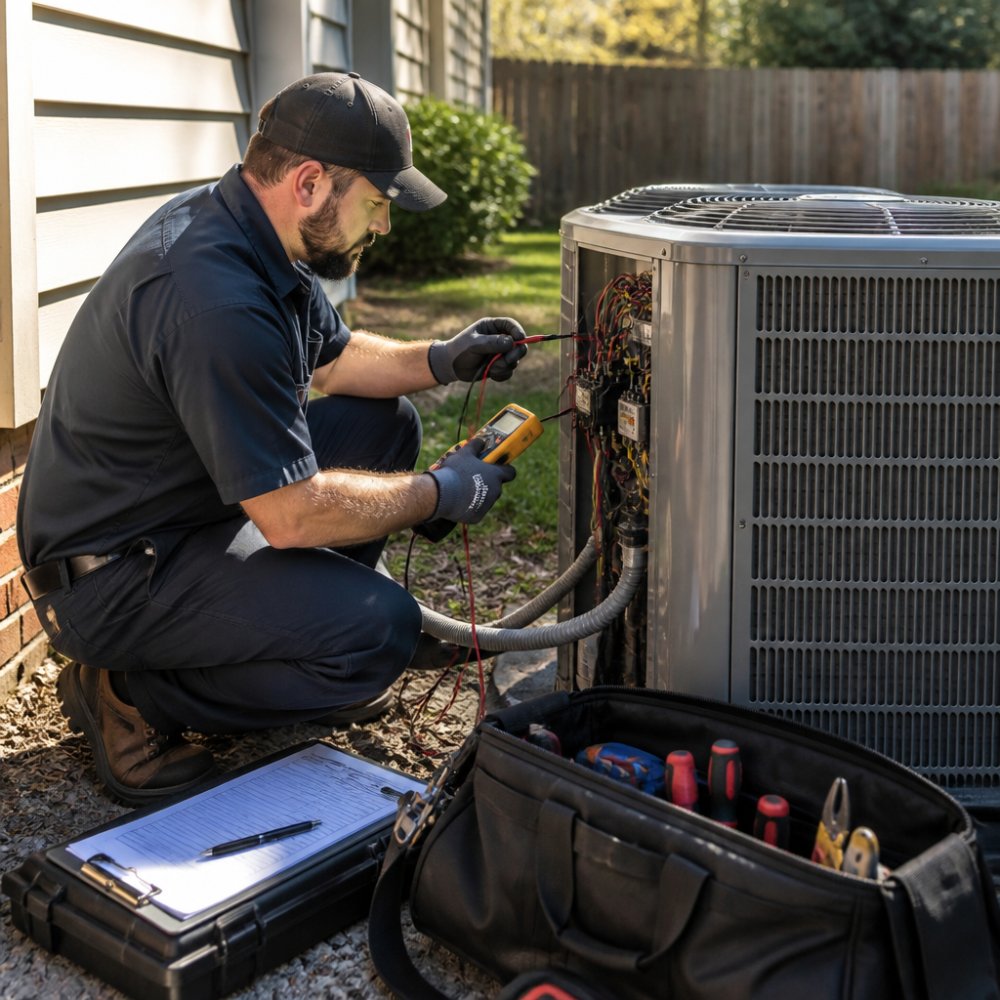
Two Visits a Year: Cooling and Heating
The spring visit focuses on the cooling side: refrigerant levels, condenser coil cleaning, condensate drain clearing, and thermostat calibration. The fall visit flips to the furnace or heat pump, checking the heat exchanger, burners, and electrical connections. Splitting the work by season keeps each system ready before it faces peak demand.
The HVAC Maintenance Checklist: What a Tune-Up Includes
A thorough tune-up covers more than a filter swap. The technician should inspect and adjust:
- Refrigerant levels and check for leaks
- Condenser and evaporator coils
- Electrical connections and capacitors
- Condensate drain line
- Blower motor and belt condition
- Thermostat calibration
- Air filter replacement
A plan that only replaces your filter and calls it a tune-up is a red flag. Ask for the written checklist before you sign anything.
7 Benefits of Annual HVAC Maintenance Plans
The core value of a maintenance plan comes down to prevention: catching small problems before they become emergency breakdowns, and keeping your system running at peak efficiency. Here are the seven benefits homeowners ask about most.
- Lower monthly utility bills through maintained system efficiency
- Longer equipment lifespan
- Fewer emergency breakdowns
- Priority scheduling when something does fail
- Discounted repairs and waived diagnostic fees
- Documented service history for warranty compliance
- Better indoor air quality
Lower Energy Consumption and Utility Bills
A dirty coil or low refrigerant charge forces your system to run longer to hit the same temperature. That extra runtime shows up directly on your utility bills. Keeping refrigerant levels and coils in spec is one of the few maintenance tasks with a measurable effect on energy consumption.
Longer Equipment Lifespan and Fewer Emergency Breakdowns
Well-maintained equipment simply lasts longer. Manufacturers design systems around regular servicing, and skipping it accelerates wear on compressors and motors, the two most expensive components to replace. Fewer emergency breakdowns also means fewer panicked weekend calls.
Priority Service, Discounted Repairs, and Peace of Mind
Plan members typically jump the queue when demand spikes. During a July heat wave, non-members wait days; plan holders get priority service. That access, plus discounted repairs, is the practical part of “peace of mind.”
The single most valuable perk of a maintenance plan isn’t the tune-up. It’s priority service during peak season, when every other homeowner is calling at once.
Signs Your HVAC System Needs Service
Watch for these signals that your system needs attention before the next scheduled visit:
- Utility bills climbing without a change in usage
- Weak airflow from vents
- Strange noises (banging, squealing, rattling)
- Frequent cycling on and off
- Musty odors when the system runs
- Uneven heating or cooling room to room
- Ice forming on the outdoor unit
The Cost of AC Repair vs Maintenance: A Cost-Benefit Analysis
Most articles tell you maintenance is cheaper than repair. That’s true, but it’s not useful until you know how much cheaper and when a plan stops paying for itself. Here’s the actual math homeowners should run before signing.
The Real Cost of a Reactive Repair
When a system fails in peak season, you pay for more than the part. A typical emergency repair bill stacks up like this:
- Diagnostic fee, many companies charge a trip charge just to look at the system, and it’s often higher after hours or on weekends.
- Emergency labor rate, after-hours and weekend calls usually carry a premium over standard rates.
- Parts markup, the failed component plus whatever the contractor marks it up.
- Collateral damage, a seized compressor can send metal debris through the refrigerant lines, which means a line flush or filter-drier replacement on top of the compressor itself.
- Comfort cost, a hotel night or a portable unit during a multi-day wait in a heat wave.
How to Run the Break-Even Math on a Plan
You don’t need a spreadsheet, but you do need three numbers:
- Your annual plan fee. Get this in writing, including any auto-renewal price.
- The value of the perks you’ll actually use. A waived diagnostic fee is only worth something if you’d otherwise pay it. A 10-15% parts discount only matters if you have a repair.
- The expected cost of one avoided failure. Ask the contractor what a mid-season capacitor or blower motor replacement typically runs, and what a compressor replacement runs. Those two numbers bracket your risk.
What the Table Actually Shows
| Approach | What you pay | What you get |
|---|---|---|
| Annual maintenance plan | Predictable yearly fee, plus any excluded repairs | Scheduled tune-ups, priority scheduling, documented service history, discounts on covered repairs |
| Reactive repairs only | Unpredictable, often higher per incident | Emergency rates, longer waits, no service history |
| Full system replacement | Highest single cost | New equipment and warranty, often avoidable if maintenance was kept up |
The table isn’t the point. The point is that the plan’s value depends on your system’s age, your tolerance for emergency spending, and whether the contract’s exclusions leave you paying full price for the repairs you actually need.
Run the break-even math with your own plan fee and your own system’s likely failure costs. A plan that looks cheap can still be a bad deal if the exclusions cover the repairs you’re most likely to face.
DIY vs. Professional Maintenance: What You Can Do Yourself
Homeowners can handle filter replacement and basic cleaning. Everything involving refrigerant, electrical connections, or the heat exchanger should go to a licensed technician. Refrigerant handling is regulated, and the U.S. Environmental Protection Agency section 608 refrigerant regulations requires certification to work with it. Doing it yourself isn’t just risky, it’s often illegal.
DIY-friendly tasks:
- Replacing air filters monthly or as needed
- Clearing debris around the outdoor unit
- Keeping vents unblocked
- Basic thermostat battery changes
Leave to a pro:
Reach out to us for more information… →
- Refrigerant checks and charging
- Electrical connection tightening
- Coil cleaning (deep)
- Heat exchanger inspection
How to Read a Service Contract: Red Flags and Warranty Risks
This is the section most articles skip. A maintenance plan can be a good deal and still leave you exposed, either because the contract’s terms work against you, or because the service it provides doesn’t satisfy your equipment manufacturer’s warranty conditions. Both problems are avoidable if you know what to look for before you sign.
How Manufacturer Warranties Actually Require Maintenance
Most residential HVAC equipment carries a manufacturer’s limited warranty on parts, and many of those warranties condition coverage on “proper maintenance” or “service by a qualified technician.” The exact language varies by brand and by the specific warranty document that came with your unit, not the marketing page on the manufacturer’s website.
What that means in practice:
- Read your own warranty document. It’s usually a paper booklet or a PDF tied to your model and serial number. Look for the maintenance clause and any required service intervals.
- Keep proof. If the warranty requires annual servicing, a dated invoice or completed checklist from a licensed technician is your evidence. A filter you changed yourself usually isn’t.
- Registration matters. Many manufacturers require the equipment to be registered within a set window after installation for the full warranty term to apply. If you bought a home with existing equipment, confirm it was registered.
- Some brands require specific documentation. A few manufacturers ask for service records at the time of a claim. If you can’t produce them, the claim can be denied even if the failure is unrelated to maintenance.
Contract Red Flags to Read Before You Sign
- Auto-renewal with no cancellation window. Many plans renew automatically and require notice 30 days or more before the renewal date. Miss the window and you’re locked in for another year.
- Vague “tune-up” language. If the contract doesn’t list what’s included, coil cleaning, refrigerant check, electrical inspection, assume the minimum will be done.
- No post-visit documentation. If the company won’t give you a written checklist or invoice after each visit, you have no warranty proof and no way to verify the work.
- Exclusions buried in the fine print. Look specifically for what’s not covered: refrigerant, compressors, heat exchangers, and after-hours labor are common exclusions.
- Cancellation fees. Some contracts charge a fee to cancel mid-term, or require you to pay out the remaining balance.
- Transferability. If you sell your home, does the plan transfer to the buyer? Some do, some don’t, and it affects resale value.
- Parts and labor caps. A “discount on repairs” is worth less if there’s a cap or if it only applies to certain components.
How to Verify a Plan Meets Your Warranty Requirements
Before signing, ask the provider three questions in writing:
- Will I receive a dated, itemized record of each visit?
- Does the plan include the specific maintenance tasks my manufacturer’s warranty requires?
- Who performs the work, and are they licensed and insured?
If the answer to any of these is vague, that’s your signal. A plan that can’t document its work can’t protect your warranty.
A cheap plan that skips documented tune-ups can leave you paying out of pocket for a major part failure your warranty would have covered. The savings on the plan fee are meaningless if the warranty claim gets denied.
Keep every service invoice, checklist, and registration confirmation in one folder, paper or digital. If a warranty claim ever comes up, that paper trail is the difference between a covered repair and a full-price one.
Seasonal Timing: When to Schedule Your Annual Inspection
Schedule cooling maintenance in spring, before the first heat wave, and heating maintenance in early fall. Booking early gets you a convenient appointment and catches problems before peak-season demand makes technicians scarce. The seasonal check-up rhythm also aligns with how most plans structure their two annual visits.
Pros and Cons of Annual Maintenance Plans
Maintenance plans aren’t right for everyone. Here’s an honest look.
Pros:
- Predictable annual cost
- Priority service during peak demand
- Discounted repairs
- Documented history for warranty compliance
- Longer equipment lifespan
Cons:
- Upfront cost even if nothing breaks
- Quality varies widely between providers
- Some contracts have restrictive terms
- Not worth it for systems near end of life
Frequently Asked Questions
Is it worth it to get an HVAC maintenance plan?
For most homeowners, yes. An annual HVAC maintenance plan typically covers two visits per year: a spring tune-up for the cooling system and a fall check for the heating side. Those visits include filter replacement, coil cleaning, refrigerant level checks, thermostat calibration, and electrical inspections. The plan helps you avoid emergency breakdowns, keeps energy consumption in check, and can satisfy manufacturer warranty requirements that demand annual professional service. If your system is more than five years old, a plan usually pays for itself through lower utility bills and fewer repairs.
What is included in a standard HVAC maintenance visit?
A standard tune-up covers a documented checklist: replacing or cleaning the air filter, cleaning the condenser and evaporator coils, checking refrigerant levels, inspecting electrical connections, testing the condensate drain, lubricating moving parts, calibrating the thermostat, and measuring airflow. The technician also checks for signs your HVAC system needs service, such as worn belts or unusual noises. Some plans include priority service, discounted repairs, and no overtime fees for after-hours calls. Ask for the written checklist before you sign so you know exactly what each visit covers.
How much does an HVAC maintenance plan typically cost?
Pricing for HVAC maintenance plans depends on your system type, the number of units, and the specific coverage you choose. Most plans are billed annually or monthly, and some include additional perks like priority scheduling or a percentage off repairs. Because 1st Service HVAC does not publish flat rates, the best way to get an accurate number for your home is to request a quote directly. Compare what each plan includes, not just the monthly payment, to see the real value.
Can a maintenance plan void my manufacturer warranty if I skip a visit?
Many manufacturer warranties require annual professional maintenance to keep coverage valid. If you skip a scheduled visit, the manufacturer may deny a claim for a failed compressor or other major component, leaving you with the full repair bill. A maintenance plan provides the documented service records you need to prove compliance. Before enrolling, read the warranty terms and confirm the plan includes the specific inspections your manufacturer requires, such as refrigerant level checks and electrical connection testing.
When your system needs service, you want a team that shows up, does the work right, and doesn’t pressure you into repairs you don’t need. 1st Service HVAC is a family-owned business serving Richmond and the surrounding counties, with licensed technicians, fast response times, and honest workmanship backed by decades of hands-on experience. Get started with 1st Service HVAC and keep your home comfortable through every season. Call now to schedule your tune-up.