
Table of Contents
- Comparison Table: Next Level Heating Alternative Options at a Glance
- 1. Carrier Infinity 24 with Greenspeed: Best for Extreme Cold
- 2. Mitsubishi Hyper-Heating H2i: Best for Zoned Comfort
- 3. Lennox SL25XPV: Best for Quiet Operation and Solar Readiness
- 4. Goodman GZV6SA3610: Best Budget-Friendly Heat Pump
- 5. 1st Service HVAC: Best Full-Service Local Alternative
- Signs of Dishonest HVAC Technicians to Watch For
- Questions to Ask HVAC Companies Before Hiring
- Frequently Asked Questions
Last Updated: September 28, 2026
Comparison Table: Next Level Heating Alternative Options at a Glance
Searching for a Next Level Heating alternative usually means you want a different HVAC contractor or heating system. This guide from 1st Service HVAC covers both, because the equipment you choose determines which contractors can service it, and the contractor you hire determines whether it performs as promised.
| Option | Best For | Key Strength | Main Trade-Off |
|---|---|---|---|
| Carrier Infinity 24 with Greenspeed | Extreme cold | Variable-speed efficiency | Highest upfront investment |
| Mitsubishi Hyper-Heating H2i | Zoned comfort | Heating down to -13°F | Needs specialized technicians |
| Lennox SL25XPV | Quiet operation, solar readiness | 69-stage output control | Premium price point |
| Goodman GZV6SA3610 | Tight budgets | Accessible high-efficiency tech | Fewer smart features |
| 1st Service HVAC | Full-service local installation | 45+ years owner experience, honest workmanship | Service area limited to surrounding counties |
1. Carrier Infinity 24 with Greenspeed: Best for Extreme Cold
The Carrier Infinity 24 with Greenspeed is the strongest cold-climate heat pump here. Its variable-speed compressor adjusts output continuously rather than cycling on and off, keeping indoor temperatures steady in hard cold.
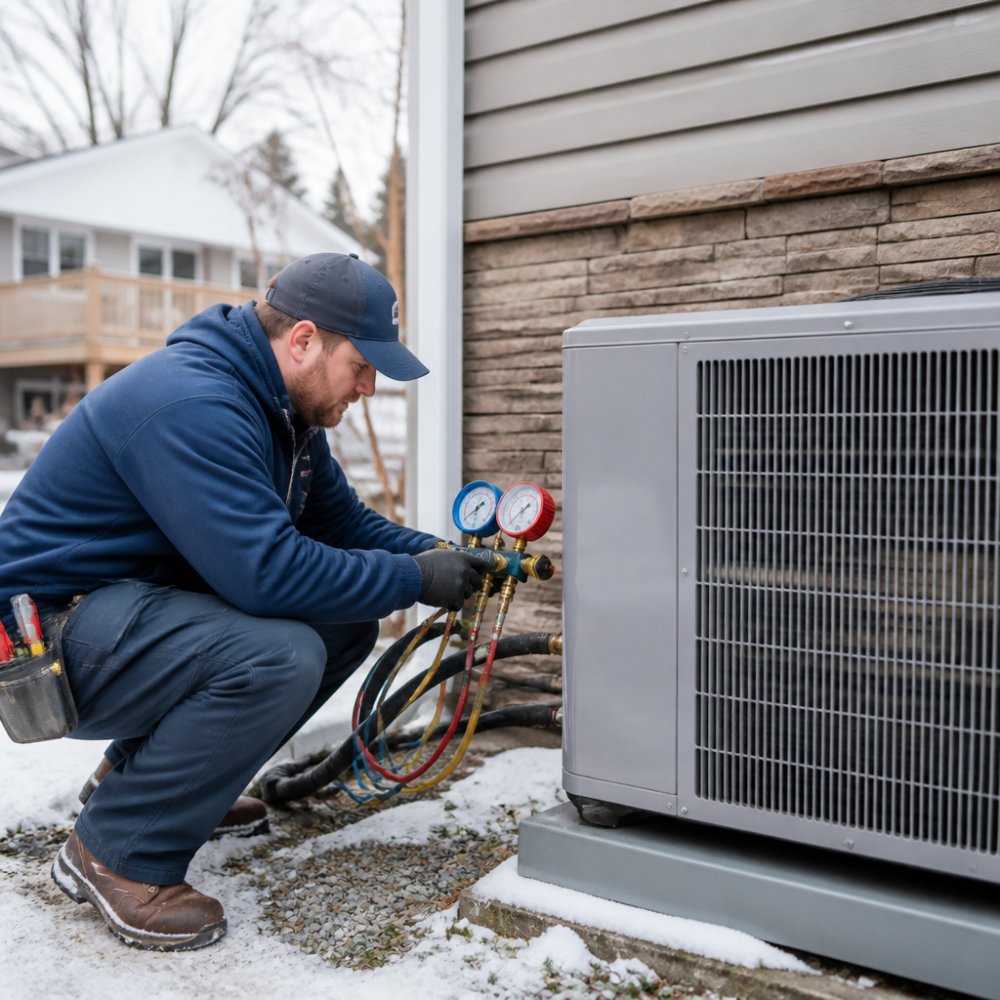
The catch: higher upfront cost than standard systems.
Pros and Cons
Pros:
- Top-tier energy efficiency ratings
- Reliable heating output in extreme cold
- Smart home integration through Infinity System Control
Cons:
- Higher initial cost than standard systems
- Best performance requires professional setup, not DIY
2. Mitsubishi Hyper-Heating H2i: Best for Zoned Comfort
Mitsubishi’s Hyper-Heating H2i earns its place through one number: it heats down to -13°F, genuine cold-climate capability. The inverter-driven compressor modulates output for efficiency, and zoning is the most flexible here, heat one room without conditioning the whole house, which matters in older homes with uneven layouts. The catch is service: these systems need Mitsubishi-trained technicians.
Pros and Cons
Pros:
- Proven performance in sub-zero conditions
- Highly customizable zoning
- Advanced filtration improves indoor air quality
Cons:
- Requires specialized technicians for installation and maintenance
- Zoned setups add cost and complexity
3. Lennox SL25XPV: Best for Quiet Operation and Solar Readiness
Noise complaints drive more HVAC replacements than most people admit. The Lennox SL25XPV addresses that with SilentComfort technology, and its 69 stages of operation adjust output in tiny increments instead of lurching between full blast and off.
The limitation: premium price.
Pros and Cons
Pros:
- Exceptionally quiet operation
- Fine-grained temperature control
- Solar-ready for future energy upgrades
Cons:
- Premium price point
- Solar benefits require additional investment
4. Goodman GZV6SA3610: Best Budget-Friendly Heat Pump
Goodman built its reputation on accessible pricing, and the GZV6SA3610 continues that with an inverter-driven scroll compressor, the same core technology behind far more expensive systems, at a budget-friendly price.
What the Specs Actually Mean
- Inverter-driven scroll compressor. Instead of slamming on and off at full power, it ramps up and down to match demand, giving steadier room temperature, less cycling wear, and lower energy use in mild weather.
- Efficiency ratings. Heat pumps are rated by SEER2 for cooling and HSPF2 for heating; higher numbers mean more efficiency per dollar. A budget inverter unit lands mid-to-upper range, good, but below the premium variable-speed models above.
- Standard thermostat compatibility. It pairs with common smart thermostats rather than a proprietary control, so you can swap controls later without replacing the system.
- Build details. The powder-coated steel cabinet resists corrosion, and the factory-installed filter drier protects the compressor from moisture and debris.
The Cost-Benefit Reality
The appeal of a budget heat pump is the shorter payback period: a smaller upfront premium means monthly savings repay the investment faster.
Where It Fits Best
- Mild to moderate climates where a mid-tier inverter unit can carry most of the season.
- Retrofits where existing ductwork is serviceable and the electrical panel supports the new outdoor unit without major upgrades.
- Budget-conscious replacements where the priority is restoring comfort without a premium price tag.
In extreme cold, a budget unit may need dual-fuel pairing with a furnace, adding cost and complexity. If winters bite hard, weigh that against a cold-climate model.
What You Give Up
Fewer smart features, less refined sound levels, and a less premium feel than the Carrier or Lennox options. The compressor may run louder during defrost cycles, normal for heat pumps, but more noticeable on budget models.
Pros and Cons
Pros:
- Accessible price for high-efficiency inverter technology
- Works with standard smart thermostats
- Strong warranty support
- Shorter break-even period than premium systems
Cons:
Reach out to us for more information… →
- Fewer smart features than premium competitors
- Less quiet than top-tier models
- May need dual-fuel pairing in extreme cold
The budget pick is not the “cheap” pick, it is the fastest-payback pick. If you want comfort restored without a big upfront hit, the Goodman is the pragmatic choice.
5. 1st Service HVAC: Best Full-Service Local Alternative
Equipment is half the decision; the other half is who installs it. Before comparing contractors, judge whether the upgrade is worth doing at all, run the numbers, not just the spec sheets.
The Break-Even Math Most Homeowners Skip
- Your current annual heating cost. Pull twelve months of utility bills and isolate the heating portion (winter months minus baseline summer usage).
- The efficiency gap. Compare your current system’s rating to the replacement’s. Furnaces use AFUE; heat pumps use HSPF2 (heating) and SEER2 (cooling). A jump from an 80% AFUE furnace to 96%+, or from a standard heat pump to a cold-climate inverter model, is where savings live.
- The installed price difference. Not sticker price, full installed cost including labor, permits, line-set or ductwork changes, and electrical panel work.
- Local utility rates and rebates. Federal tax credits and utility rebates can shorten payback substantially. Confirm current amounts before signing, because programs change.
A simple break-even formula:
Break-even years = Upfront premium ÷ Annual heating savings
Climate Zone Changes the Answer
The right system depends on where you live.
- Extreme cold (long stretches below zero): Cold-climate inverter heat pumps rated well below freezing, often paired with a dual-fuel setup that switches to a gas furnace on the coldest days.
- Mixed / moderate winters: A standard high-efficiency heat pump or hybrid system balances upfront cost and seasonal savings.
- Mild winters: A heat pump alone often covers the whole year, and cooling becomes the bigger efficiency story.
Sizing matters as much as category. An oversized system short-cycles, wears out faster, and dehumidifies poorly. A Manual J load calculation tells you the right capacity, not a square-footage rule of thumb.
Retrofitting an Older Home
Most guides assume new construction; most homeowners don’t live in it.
- Ductwork condition is the first check. Leaky or undersized ducts waste conditioned air before it reaches a room. Sealing and balancing is often cheaper than replacing the system and improves comfort immediately.
- Electrical capacity. Heat pumps and variable-speed equipment may need a dedicated circuit or panel upgrade. Scope this before committing.
- Space and clearance. Outdoor units need airflow clearance and a stable pad; indoor air handlers need service access.
- Ductless options. In homes with no ductwork or chronically uncomfortable rooms, ductless mini-splits (like the Mitsubishi H2i above) heat and cool individual zones without a full duct system.
Why Local Still Matters
1st Service HVAC is a family-owned business serving Richmond and surrounding counties, with the owner bringing over 45 years of HVAC experience. The team handles AC repair, furnace maintenance, and energy-efficient installations with licensed technicians.
Pros and Cons
Pros:
- Family-owned and rooted in the community
- Local expertise on area building styles, climate, and rebate programs
- Fast response times
- Reliable repair for all makes and models
- Willing to run load calculations and itemize quotes
Cons:
- Service area limited to Richmond and surrounding counties
- Pricing depends on system and scope, so a quote is required
Ask every contractor for a Manual J load calculation and a line-item quote that separates equipment, labor, permits, and ductwork. A quote that only lists a tonnage and a total price is impossible to compare fairly, and that ambiguity often hides an oversized system.
U.S. Department of Energy guide to heat pump systems
Signs of Dishonest HVAC Technicians to Watch For
Knowing the signs of dishonest HVAC technicians protects you. A bad technician can make good equipment perform badly and charge you twice for it.
Watch for these red flags:
- Pressure to decide immediately. Legitimate urgency exists when a heat exchanger is cracked; manufactured urgency, especially on a mild day, usually means a sales quota.
- No written estimate before work starts. Verbal quotes shift, get scope, parts, and labor in writing.
- Refusal to show you the problem. A technician should point at the failed capacitor, corroded contactor, or refrigerant leak.
- Diagnosis without testing. Replacing parts by guesswork is costly and billed to you.
- No license or insurance details on request. Licensed technicians carry credentials and share them.
- Quotes that change after work begins. Legitimate discoveries happen, but the price should be re-approved before proceeding.
Never authorize a full system replacement based on a single technician’s verbal assessment during an emergency call. Get a second opinion in writing. Emergency pricing pressure is the most common context for unnecessary replacement recommendations.
Questions to Ask HVAC Companies Before Hiring
The right questions to ask HVAC companies before hiring reveal both competence and character. Ask these before signing anything.
- Are your technicians licensed, and can I see the credentials? Licensing is a baseline, not a bonus.
- Will you provide a written estimate before starting work? Get parts, labor, and timeline itemized.
- Do you service all makes and models, or only brands you sell? A contractor who only services what they sell has an incentive to recommend replacement.
- What warranty covers parts, and what covers labor? These are often different, and labor warranties are frequently shorter.
- How do you handle emergency calls on weekends? If your heat fails on a Saturday, you want to know before it happens.
- Can you show me the failed component? A confident technician says yes.
- Do you offer financing for larger installations? Relevant if you are weighing a full system upgrade.
- How long have you worked in this area? Local experience predicts how well a system gets sized for your home.
The best equipment installed poorly will underperform a mid-tier system installed correctly. Contractor quality is not a secondary consideration.
Frequently Asked Questions
What is the best indoor alternative heat source if I don’t want a full system replacement?
Ductless mini-split heat pumps and high-efficiency space heaters are the most common indoor alternatives. Ductless systems from Mitsubishi and similar brands provide zoned heating without ductwork, while space heaters work for single rooms. For whole-home comfort, a heat pump or hybrid furnace paired with a smart thermostat delivers the best balance of efficiency and coverage. A local HVAC contractor can assess your home’s layout and insulation to recommend the right fit.
What are the signs of dishonest HVAC technicians?
Watch for technicians who pressure you into immediate replacements without explaining why, quote prices that change after the work starts, or refuse to show licensing and insurance. Other red flags include diagnosing problems without running tests, recommending repairs your system doesn’t need, and avoiding written estimates. A trustworthy technician explains the issue in plain language, provides a written quote, and lets you decide without pressure.
What questions should I ask HVAC companies before hiring?
Ask whether the company is licensed and insured, how long technicians have been in the field, and whether they offer written estimates before starting work. Also ask about warranty terms on parts and labor, emergency and weekend availability, and whether they service all major brands. Request references from recent local jobs. A reputable company answers these without hesitation and puts the details in writing.
Is it better to choose a family-owned HVAC business over a large franchise?
Family-owned businesses often provide consistent technicians. They also tend to have deeper knowledge of local building styles and climate conditions. Large franchises may have broader brand recognition, but the technician you get can vary.
How can I tell if an HVAC quote is fair?
A fair quote itemizes equipment, labor, and any permits or disposal fees. It should include the model number, efficiency rating, and warranty terms. Get at least two written estimates and compare the scope, not just the total. If one quote is significantly lower, check whether it excludes labor or uses lower-tier equipment. Ask each contractor to explain what’s included so you can compare fairly.